
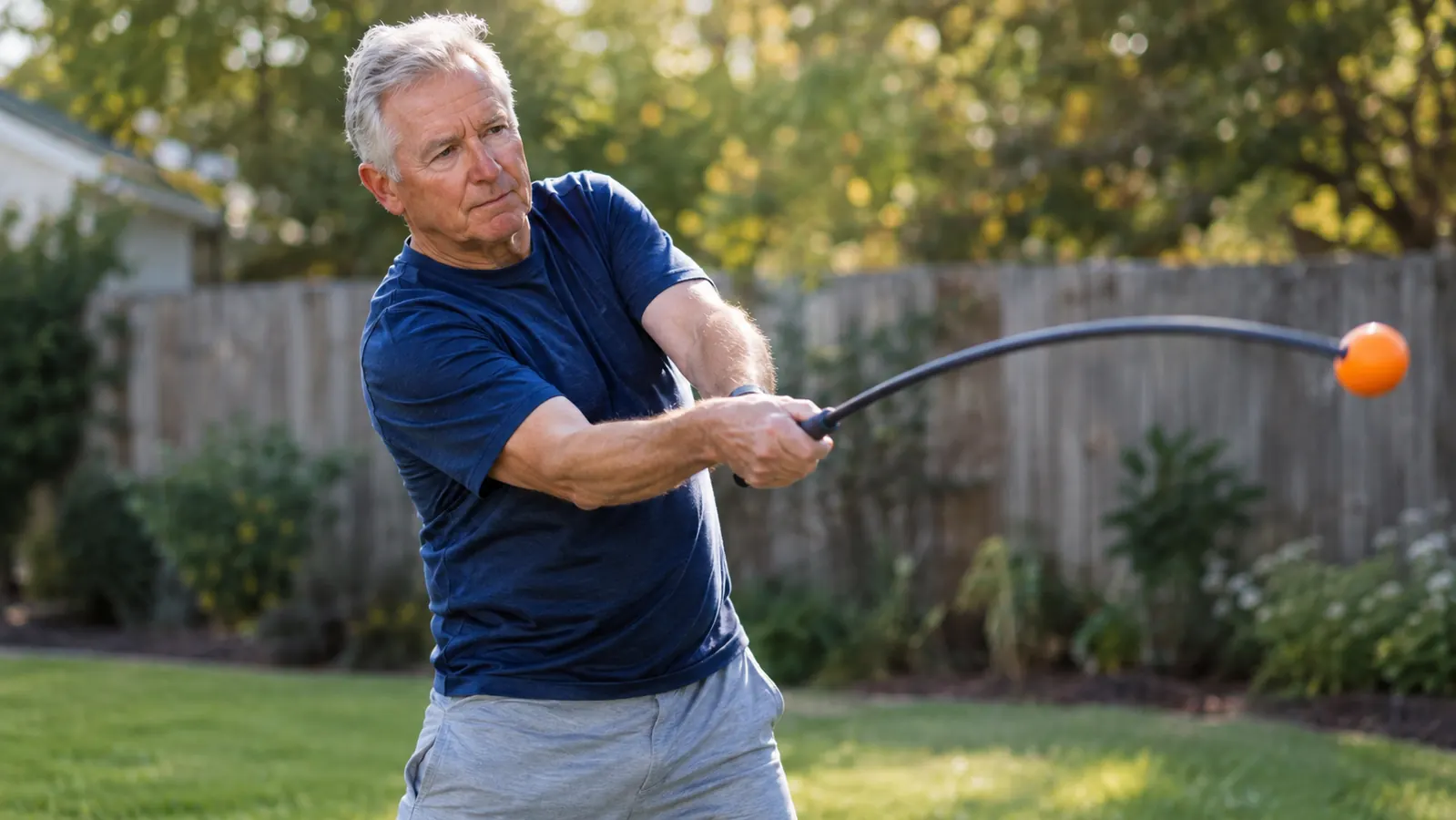
I can tell you the exact moment my backswing went bad. It was the same afternoon my lower back let me know, four years ago this autumn, that it was done with long range sessions. I stood over a bucket of balls, felt the familiar tightness on my left side, and started cutting my backswing short without even deciding to. A short backswing means you have to rush everything else to get the club to the ball on time, and by the end of that autumn I had a swing that was fast, tense, and wrong. The thing that finally slowed me down was the Orange Whip.
A friend at the range gets the credit for putting it in my hands, but my wife Carol gets the credit for the push. She does not golf, but she watches me come home stiff and grumpy, and last winter she suggested, in the gentle way she has, that maybe I ought to stop skipping my warm-up. I had been skipping it because warming up hurt. That is the trap. My physical therapist had given me six visits' worth of good advice four winters ago, and I had let most of it slide. So in March I ordered the Orange Whip, full size, and started swinging it in the backyard.
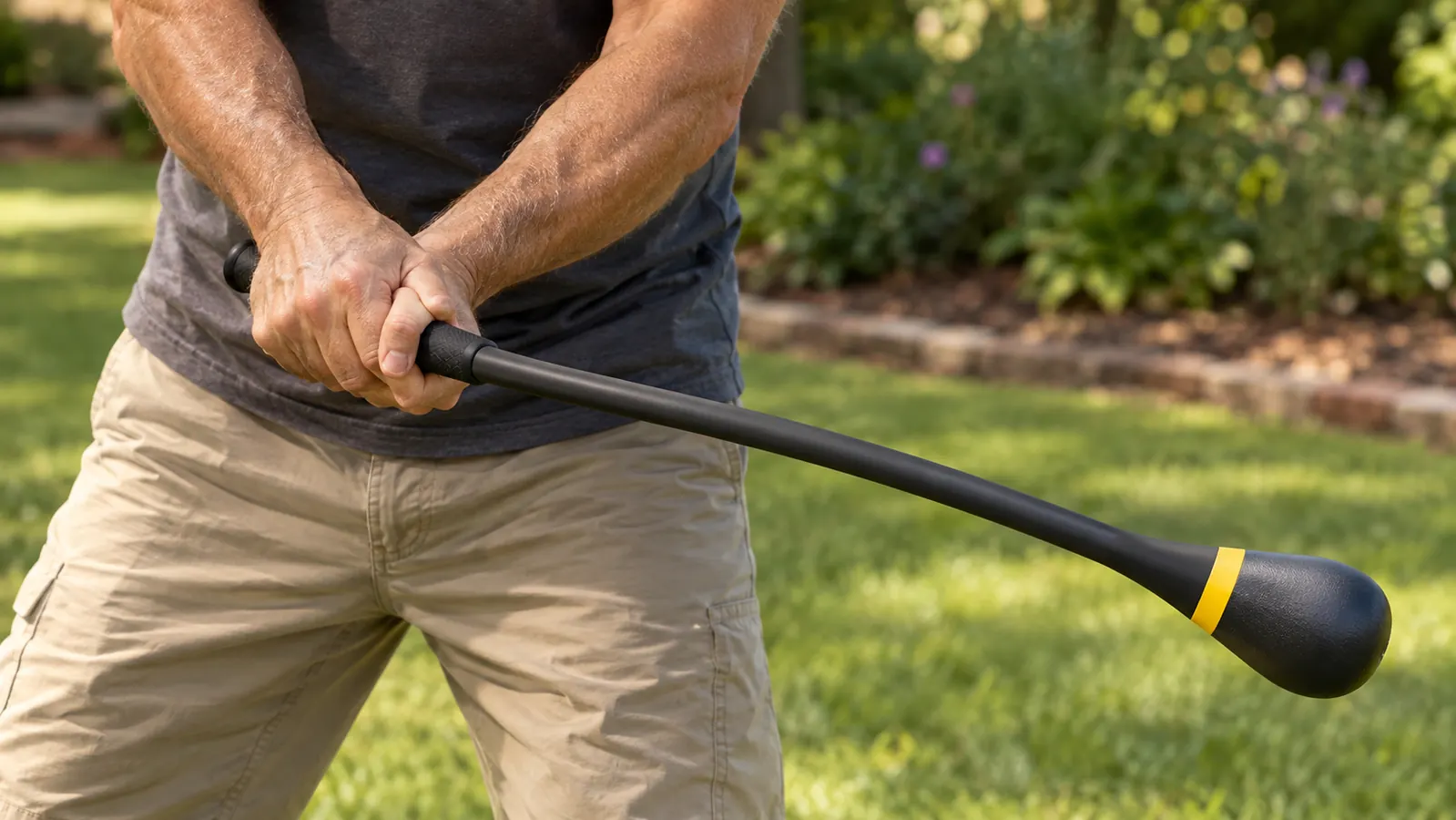
Here is what I did not expect: the thing feels like a toy until you swing it. The shaft is flexible, there is a weighted ball on the end, and a counterweight sits up near the grip. If you take it back slow and let it load, the weight carries the club through and you feel it swing itself. If you rush, the whole thing feels clunky and wrong, and you know it before the swing is over. It does not let you fake it.
I used it wrong at first. I treated it like a warm-up, which it is, but I did not understand the point of the slow swings. Then one morning in the backyard I let the swing happen instead of making it happen, and the club swung itself. That sounds like something a shop teacher would say to sound wise. It is also just what the thing does. The weight loads the shaft, the shaft unloads, and your hands mostly have to stay out of the way.
The payoff showed up on the course. Tuesday, Thursday, and Saturday rounds started going smoother. I was not swinging any harder. I was swinging slower, which meant I was swinging in sequence, hips and shoulders and arms arriving in the right order. My contact got better, and my back stopped complaining as much the evening after a round. Not cured. Not healed. Just less stiff, and that is a big deal at my age.
Rush the Orange Whip and it feels clunky and wrong, and you know it before the swing is over. Swing it smooth, and the weight does the work for you.
Want to slow your swing down before the first tee?
The Orange Whip is the warm-up I reach for on the mornings I play and in the parking lot before a round. It is made in the USA, and it will show you your tempo problem in about ten seconds. Check today's price on Amazon.
Amazon Check Today's Price on Amazon →The routine now is simple. On the mornings I play, which is Tuesday, Thursday, and Saturday, I take the Orange Whip into the backyard after breakfast and make a dozen slow swings. Not hard swings. The whole point is that they are easy. Then I do a few more in the parking lot before I check in, and I walk to the first tee loose instead of tight. That has made more difference than any stretching routine I ever half-heartedly tried.

The parking lot swings get me a few looks, and I do not care. A man my age doing practice swings next to his trunk looks like a man who forgot something. But the first tee does not wait, and the alternative is a stiff first drive and a long walk behind it. I would rather look a little odd for thirty seconds.
The part that surprised me most is that the Orange Whip did not collect dust after the novelty wore off. Seven months in, it lives by the back door, and it gets used most mornings I play. That matters. I threw out a cheap foam mat after two winters because it flattened out on me, so I know the difference between gear I will use and gear I will not. This one gets used.
Evenings after a round, I still spend ten minutes on the living-room rug with my foam roller, working on my upper back and hamstrings the way my physical therapist showed me. The Orange Whip does not replace that, and I would not want it to. They do different jobs. But I have noticed I reach for the roller less often after a round now, because the round did not beat me up as much in the first place. That is the quiet win nobody talks about.
One honest note. It will not fix your swing on its own, and it will not fix your back. If your back hurts, go see a doctor or a physical therapist, the way I did four years ago. What the Orange Whip did for me was take the rush out of my swing, and a swing without a rush is a lot easier on a stiff lower back. That is the whole story, and I think it is a good one.
What I'd Tell You If We Were Sitting at My Kitchen Table
If you came over to the house and asked me about it, here is what I would say. If your swing has gotten fast and short because your back is stiff, a weighted trainer is worth a try, because it will show you your tempo problem in about ten seconds. Order the Orange Whip, take it to the backyard, and do not rush it. If you rush it, it will tell you, and that is the whole lesson. And if it does not click with you, it is still a solid two minutes of warm-up before a round, which is more than most of us do. That is not a bad deal.
Slow it down and see what changes.
The Orange Whip has been part of my routine since March, and it is the rare training aid that still lives by the back door. Check today's price on Amazon.
Amazon Check Today's Price on Amazon →