
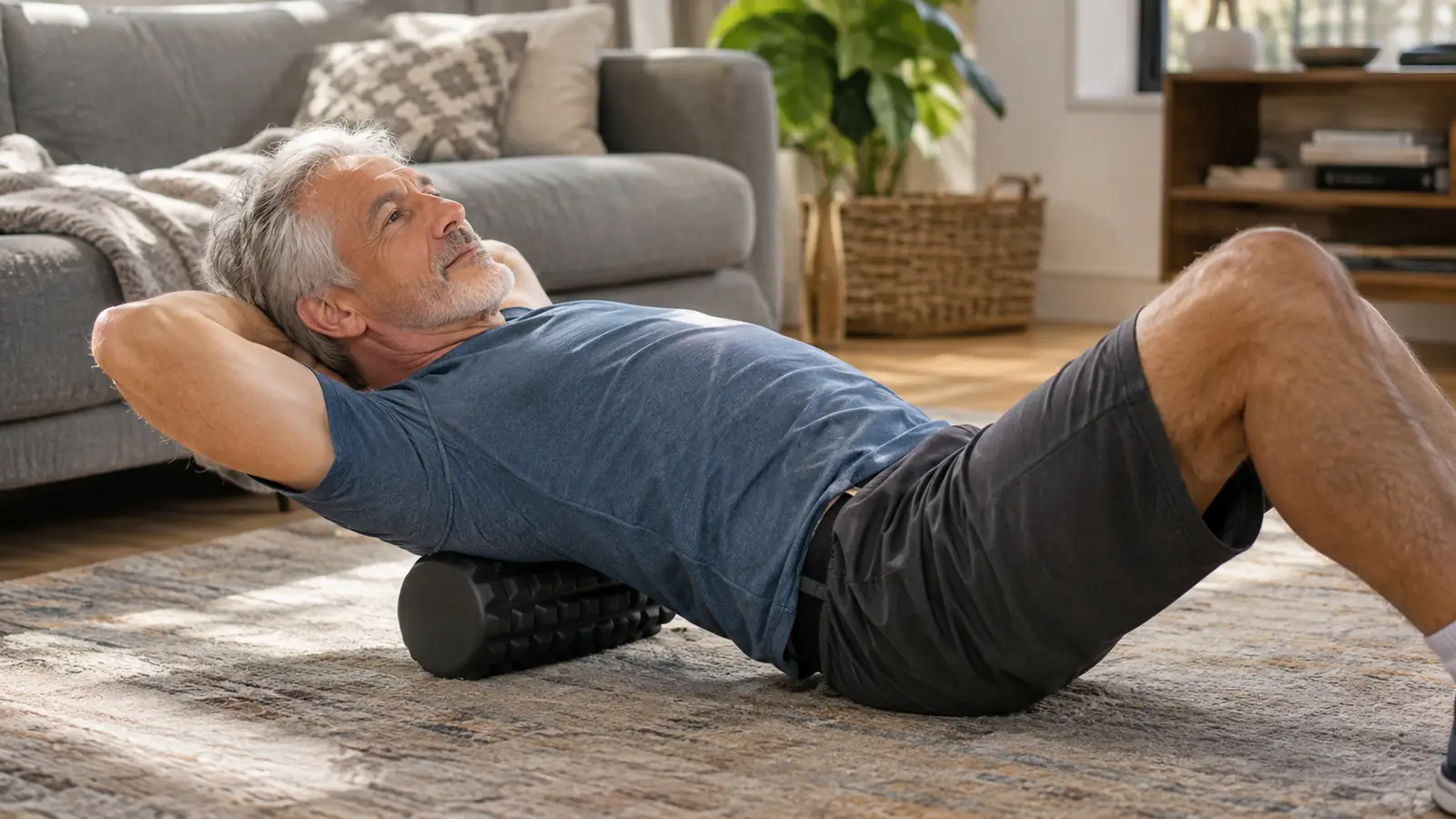
I am Russ, 63, retired after 31 years of teaching high-school shop class, and I play golf three times a week at a public course outside Cleveland. About four years ago, after a long range session, I felt a lower-back strain that still gets stiff in the morning and sore the evening after a round. My physical therapist told me to roll my upper back, glutes, hips and hamstrings, and never directly on my lower spine. So I bought the TriggerPoint GRID 1.0 foam roller in January 2025, and it has lived on the living-room rug ever since. Here are 10 reasons a foam roller belongs in every golfer's routine.
The 13-inch TriggerPoint GRID is the roller I reach for most evenings
It is firm, it stays put on the rug, and it has held up through 21 months of regular use. If you want one tool that makes the evening after a round feel better, this is the one I would start with.
Amazon Check Today's Price on Amazon →It targets the muscles that actually get tight from a golf swing
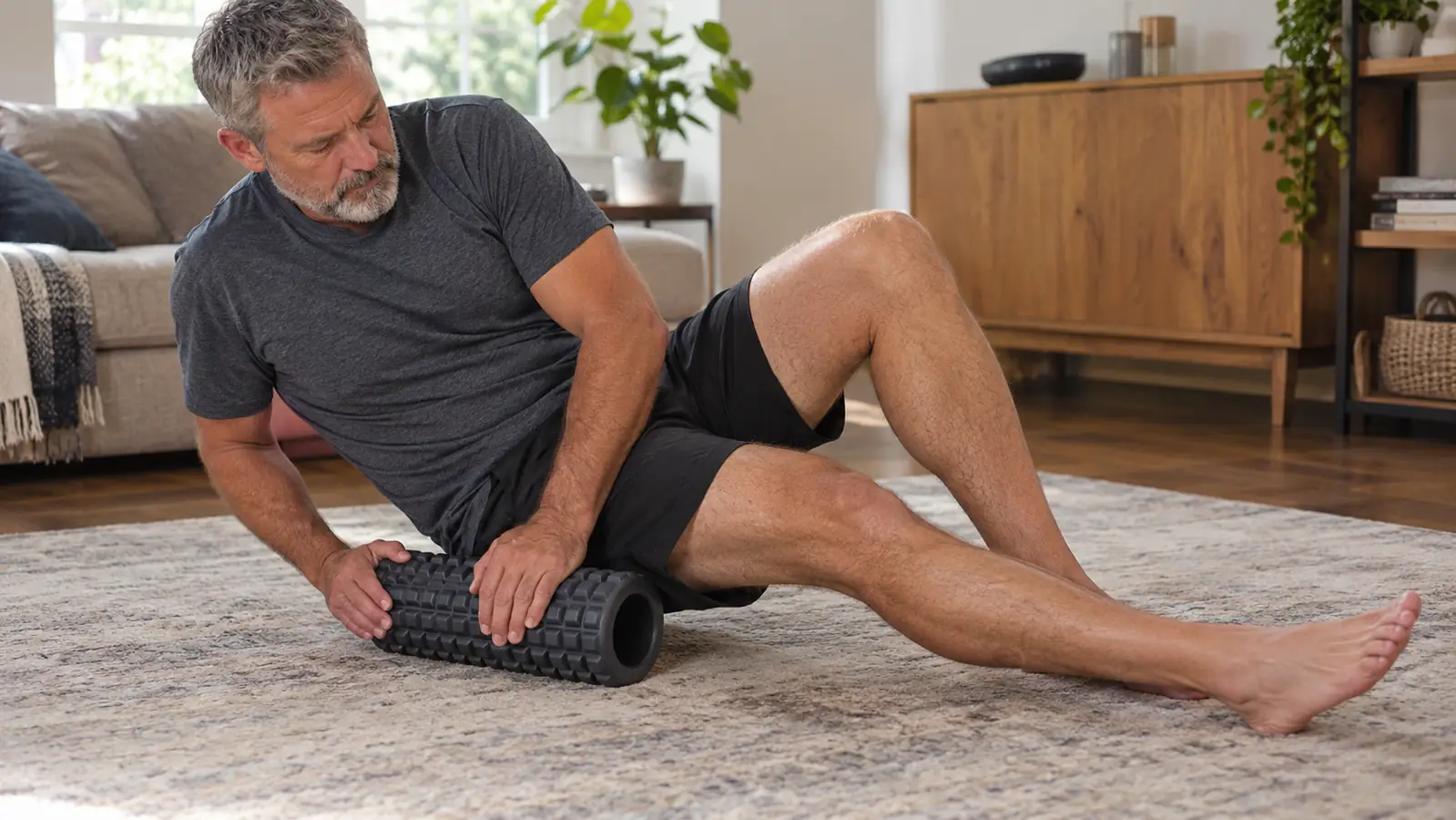
A golf swing twists your hips, glutes and upper back in a way almost nothing else in daily life does. The TriggerPoint GRID's firm, multi-density surface lets me work on my glutes and hips after a round, and that is where most of my stiffness lives. When I saw my physical therapist that first winter, she drew me a simple picture: the lower back takes the blame, but the hips and glutes are usually the ones doing the complaining. Four years later, I still think about that picture every time I roll. There is a spot on my right glute that aches around the 14th tee on a hilly course, and ten minutes on the roller finds it every time.
It fits the routine without adding a single errand
I do not have to drive anywhere or book anything. The roller sits on the living-room rug, and most evenings after a round I spend ten minutes on it while Carol watches her shows. No setup, no cleanup, no batteries. That is the whole reason it still gets used 21 months later.
It is the warm-up my wife kept telling me to do
Carol is the one who suggested I stop skipping my warm-up, and she was right. On a Tuesday morning round, I roll for five or six minutes on the rug while the coffee brews. That is enough to loosen my upper back and hips before I even get in the car. I used to think a warm-up meant a few practice swings on the first tee, but a few minutes on the roller before I leave does more for my back than any practice swing ever did. I am not a coach and I do not pretend to be one, but I know what a seized-up back feels like at 8:30 on the first tee. It grabs when I try to turn, and it turns the whole round into damage control. The roller helps me show up looser, and showing up looser is half the battle.
It reaches the spots my hands cannot
I can press on my own hamstring with my thumbs, but I cannot put real pressure on the middle of my upper back without a tool. The GRID's surface does that work for me. I lie on it, let my body weight do the pressing, and move slowly from one side to the other. It is not a massage, but it is the closest thing I can do at home on a Tuesday night.
It gives me something useful to do the evening after a round
The soreness usually shows up a few hours after I get home, not on the course. On a Saturday round I am home by early afternoon, and around dinner, when I stand up from the couch, my lower back reminds me I spent four hours twisting. The stiffness does not come from any one swing. It comes from four hours of small twists, each one harmless on its own and all of them adding up. That is when I roll. Ten minutes on the rug, mostly glutes and hips, slow passes on each side, and the next morning I am less stiff. I cannot prove it with a chart, but I can tell you which mornings feel better, and they are the ones after I rolled.
It is simple enough that I actually use it
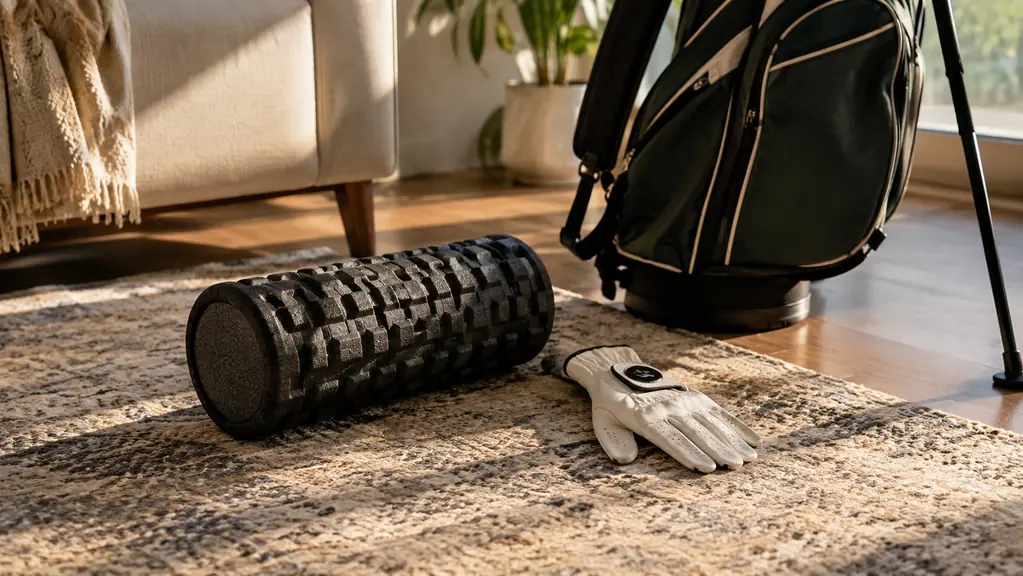
I have owned training aids that required reading a manual. The roller requires lying on the floor. That simplicity is the feature. When something takes more effort to set up than it does to use, it ends up in the garage. The GRID has never once ended up in the garage.
It travels as far as the living room, which is exactly where I need it
I do not take the roller to the course. It stays on the rug, and that is the point. The routine has to happen at home, after the round, when the stiffness actually arrives. A tool that only works at the gym would not work for me, because I am not at the gym. I am on the couch, and the roller is three feet away.
It has held up through 21 months of daily use
I bought mine in January 2025, and it still feels as firm as the day it arrived. No cracks, no flat spots, no smell, no squeaking. I use it most evenings after a round and a few minutes most mornings, which adds up to somewhere north of five hundred sessions by my rough count. The grid surface still bites into the same spots it did on day one. The GRID is a hollow-core roller with a multi-density grid surface, and after nearly two years of that kind of use, it has not given me a single reason to shop for a replacement.
It pairs well with the rest of my routine
I use the Orange Whip in the backyard as a warm-up, the Alignment Stix at the range, and the roller on the rug. They do different jobs. The roller is the one that helps me recover after the work is done. If you already own a swing trainer, the roller is the missing second half of the equation.
It is the cheapest insurance I own for a back that does not like being twisted
I am not going to tell you a foam roller fixes anything. It does not. But it makes my back feel better, and feeling better means I swing freer and enjoy the round more. I use it almost every day, more than any other piece of gear I own. That is the best value in my bag.
What I'd Skip
I would skip the cheap smooth rollers that flatten out after a few months. I owned a thin foam mat that went flat, and I have tried a friend's plain smooth roller. It does not give the same pressure, and it rolls around on the rug. I would also skip rolling on a bare floor. The rug gives a little, and that makes it easier to relax into the roller instead of bracing against it. And I would skip any routine that tells you to roll directly on your lower spine. My physical therapist was clear about that, and I will pass along the same advice: for real or worsening pain, see a doctor or physical therapist.
I cannot prove it with a chart, but I can tell you which mornings feel better, and they are the ones after I rolled.
If your back gets stiff after a round, the TriggerPoint GRID is worth a try
It is firm, it lasts, and it lives on the rug where you will actually use it. That is the whole case for it.
Amazon Check Today's Price on Amazon →