

About four years ago I came off a long range session and my lower back let me know it was done with me for the day. I was 59 then, not 63, and I figured it would settle down like every other ache. It did not. It got stiff that night, stiffer the next morning, and it has been a thing I have managed ever since. My physical therapist gave me six visits that winter and one piece of advice I still follow: keep the muscles around the problem loose, but do not roll directly on the spine. The tool I reach for most evenings to do the loose part is the TriggerPoint GRID foam roller.
I bought the 13-inch GRID in January of 2025, so I have been using it for the better part of two years. It lives on the living-room rug, it gets used most evenings after a round and for a few minutes most mornings, and it has earned a permanent spot in my routine. This review is about what that kind of steady, unglamorous use actually does, and just as important, what it does not do. I have learned the difference the hard way, and it is worth being plain about both.
The Quick Verdict
The best recovery tool I own for the mornings my back wakes up stiff, as long as you use it the way a physical therapist would tell you to. Firm, durable, and simple, but it is a routine, not a cure.
Amazon Check Today's Price →The roller I reach for most evenings after a round
After 21 months on my living-room rug, the TriggerPoint GRID is still the first thing I grab when my back feels tight. It is not a cure, but it is the most consistent part of my recovery routine. Check today's price on Amazon to see if it fits yours.
Amazon Check Today's Price on Amazon →How I've Used It
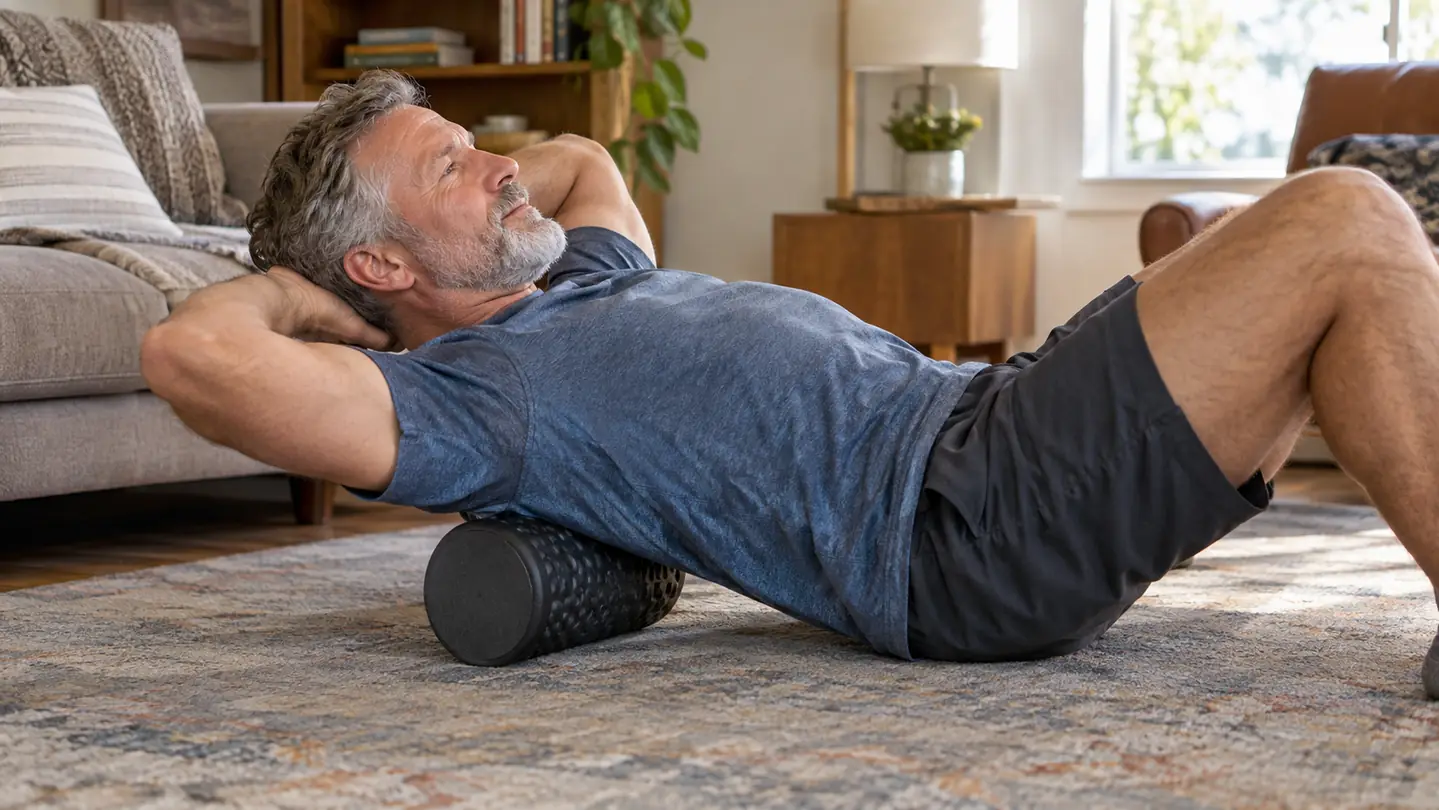
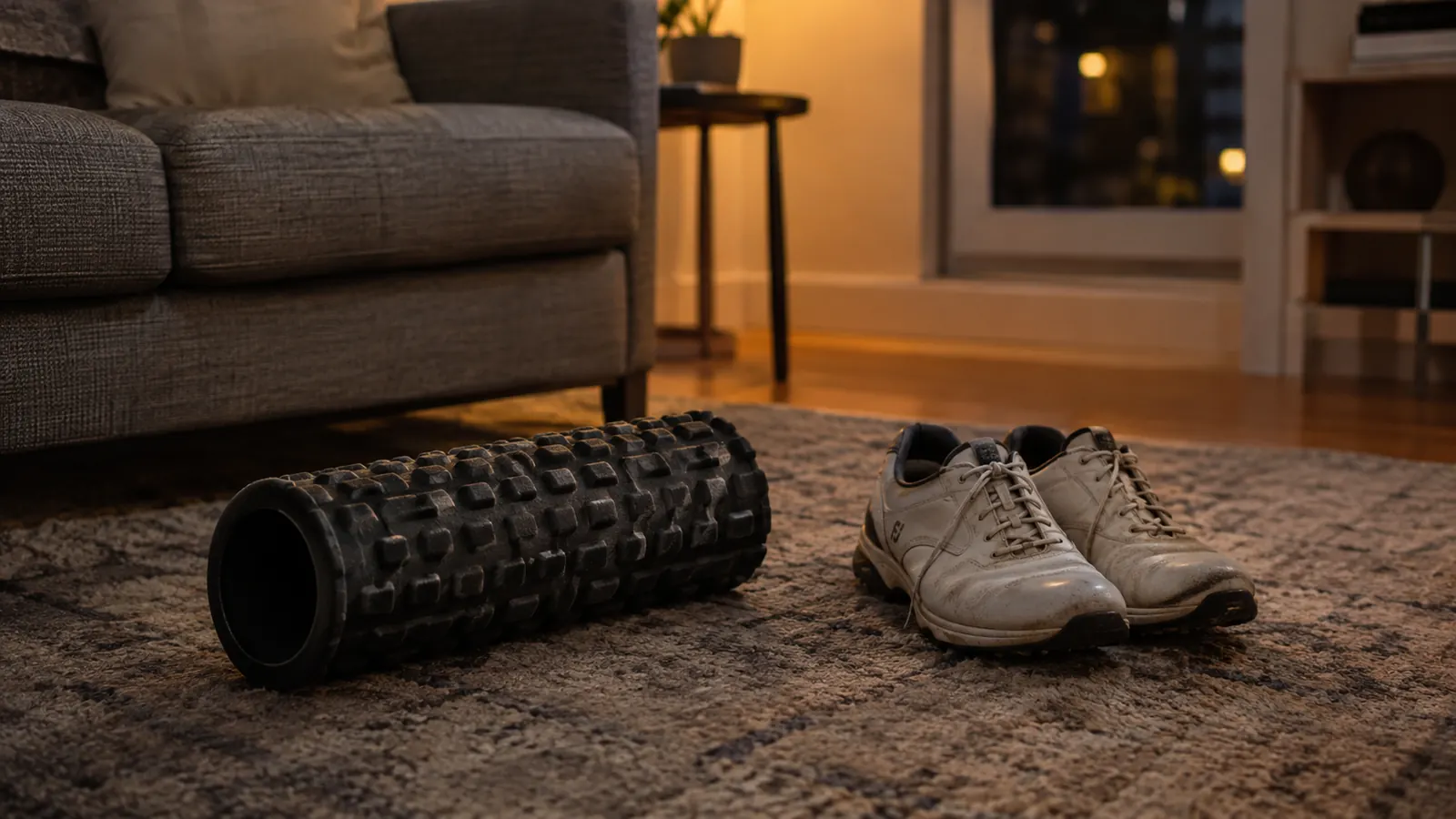
My routine is boring on purpose. I play golf Tuesday, Thursday and Saturday mornings at a public course outside Cleveland, I walk when the weather lets me and ride in a cart otherwise, and most weeks I get one extra evening at the range. That is a lot of hours in a golf posture, and by the evening my back knows it. When I get home from a round, I change out of my golf shoes and spend ten or fifteen minutes on the living-room rug with the roller.
I start with my upper back, because that is the part that gets the least attention during a round, then work down to my glutes and hips, then my hamstrings. My physical therapist told me not to roll directly on my lower spine, so I do not. The muscles around it get worked, the spine itself stays off the roller. That single instruction has kept me out of trouble for two years, and it is the first thing I would tell anyone who picks one of these up.
Most mornings I also spend a few minutes on it before I do anything else, especially on days when my back wakes up stiff. That morning session is shorter, maybe five minutes, and it is more about waking the muscles up than working anything out. Carol, my wife, is the one who pointed out that I used to skip any kind of warm-up and then wonder why my back complained after eighteen holes. She does not golf, but she was right, and the roller is part of the answer.
Why a Golfer's Back Gets Stiff in the First Place
The stiff feeling I get is not one thing. It is a mix of a lower back that does not like being twisted, hamstrings that tighten up over four hours, and hips that get cranky from standing in a golf posture or sitting in a cart. A foam roller does not fix any of those on its own. What it does is give the muscles a reason to let go, and that makes the next morning easier. That sounds small, but when you are 63 and your back is the first thing you notice when you get out of bed, small matters.
I did not start with the GRID. The first roller I ever tried was a plain smooth one at the physical therapist's office, and I remember thinking it felt fine but did not seem to do much. The GRID is different. The surface has a firm multi-density grid, little raised sections that work into the muscle instead of just pressing on it. It took me a few sessions to get used to the firmness. The first time I rolled my upper back I wondered what I had signed up for. By the third or fourth session I understood why I picked the firmer surface myself, after my therapist told me a roller at home was worth having.
What the GRID Surface Does Differently
The way I would describe it to a friend: a smooth roller feels like a firm log under your back, and the GRID feels like someone with knowledgeable hands working the same spot. The raised grid digs in just enough to find the tight places, and the multi-density foam underneath means the roller itself does not give way. The pressure comes from the surface, not from how hard you push. That matters for someone like me who is not flexible enough to put a lot of weight into a stretch.
The hollow core keeps the whole thing light, which matters more than you would think. I move it from the middle of the rug to the edge depending on where the TV is, but it never leaves the living-room rug, which is exactly where I want it. A solid roller would still be sitting in the garage. The 13-inch length is enough for the areas I actually use it on, my upper back, my glutes, my hips and my hamstrings. I do not need a full-length roller for any of those.
One thing I figured out early: the roller does not need to hurt to be working. The firmness can fool you into thinking you should push through discomfort, and that is exactly backwards. My therapist's instruction was to ease into the pressure, breathe, and let the muscle soften. When I do it that way, the first few passes are uncomfortable and then the area starts to give. When I rush it, I just end up sore. The GRID rewards patience, which is a nice way of saying it will punish you if you are in a hurry.
Ten minutes on the living-room rug most evenings does not sound like much, but it is the difference between waking up stiff and waking up able to bend over and tie my shoes.
What It Does for the First Tee
I am not going to tell you the roller added distance to my drives or fixed my slice, because I have no honest way to measure that and I am not a teaching pro. My handicap sits around 16, which means I am a regular golfer, not a good one. What I can tell you is that my warm-up changed. Before the roller, I would step onto the first tee with a back that felt tight and hope it loosened up by the third hole. Now I do a few minutes on the rug before I leave the house, and the first tee feels less like a gamble.
The difference between a round where my back is cooperating and a round where it is not is the difference between enjoying myself and just getting through it. The roller does not make my back perfect. It makes my back less stiff, and less stiff is a much better way to start four hours on a golf course. I also use it the evening after a round, which I think does more for me than the morning session, because that is when the soreness from the day is actually settling in.
Sunday afternoons I play pickleball with friends, and I have noticed the roller helps there too. It is the same kind of stiffness, just from a different sport. My back does not care whether I got stiff swinging a golf club or reaching for a pickleball shot. It responds the same way to ten minutes on the rug.
The Honest Limits
Here is the part I want to be plain about. The roller does not cure anything. It does not treat a diagnosis, and it will not fix a back that needs actual medical attention. My strain was checked by a physical therapist, and if you have real pain, or pain that is getting worse, that is who you should see first. A foam roller is not a substitute for that conversation, and no product I have ever used is. I would rather you hear that from me than figure it out after wasting money and time.
It also does not work if you use it once a month. The benefit I get comes from the steady routine, most evenings after a round and a few minutes most mornings. After twenty-one months I can tell the difference on the weeks I skip it. My back does not punish me immediately, but the morning stiffness creeps back, and I end up reaching for it again. Consistency is the whole game with this tool, and that is true no matter how good the roller is.
And it will not help if you use it wrong. Rolling directly on the lower spine is the mistake I see people make, and it is the one thing my therapist told me specifically not to do. Work the muscles around the area, go easy at first, and stop if something hurts in a way that feels wrong. The GRID is firm, and firm takes getting used to. Respect that and it will treat you well. Ignore it and you will blame the roller for something that was never the roller's fault.
How It Has Held Up After 21 Months
After close to two years of regular use, the roller still feels the same as the day I bought it. The grid surface has not flattened, the foam has not softened, and the hollow core has not developed any cracks or odd noises. It lives on the living-room rug, so it does not get dragged around the way a range tool would, but it has been stepped on by guests, kicked under the couch, and once used as a pillow by a guest who fell asleep during a movie. It has taken all of that without complaint.
The only thing I have noticed is that the surface picks up lint from the rug, and it takes a minute to wipe off with a damp cloth. That is a detail, not a complaint. For something that gets used this often, the TriggerPoint build quality has been the most pleasant surprise of the whole two years. I have had golf gloves wear out faster than this roller has shown any signs of wearing in.
What I Liked
- Firm grid surface works into the muscle without the roller flattening out
- Hollow core keeps it light enough to move around the house easily
- 13-inch length is right for upper back, glutes, hips and hamstrings
- Has held up well through 21 months of nearly daily use
- Simple enough to build a steady routine around, and the routine is what actually helps
Where It Falls Short
- The grid is firm, and the first few sessions are uncomfortable until you get used to it
- You have to be careful not to roll directly on the lower spine, which takes discipline
- Shorter than a full-length roller, so you do more positioning for some areas
- Does nothing on its own without regular use, and it is not a substitute for medical advice
Who This Is For
If you are a golfer whose back gets stiff after a round, or stiff the next morning, and you have had that checked out by a doctor or physical therapist, this roller is worth a serious look. It is for people who want a simple tool they can use at home without setup or fuss. It is for the person who understands that recovery is a routine, not a one-time event. That is the crowd I belong to, and the GRID has earned its spot in my living room.
Who Should Skip It
If you have real back pain, sciatica, or anything that is getting worse, skip the roller and see a professional first. This is a golfer's experience, not medical advice, and no foam roller is a substitute for a proper diagnosis. Also skip it if you want a tool you use once and forget about, because it only works as part of a routine. And if you do not like firm pressure on your muscles, a smooth roller or a softer one is a better starting point. The GRID does not ease you in gently, and that is not a flaw, it is just the truth about how it feels.
If your back is telling you something, listen to it
For me, that meant seeing a physical therapist first, then building a simple routine around the TriggerPoint GRID. It has sat on my living-room rug for 21 months and it earns its keep most evenings. Check today's price on Amazon if you want to see whether it fits your routine.
Amazon Check Today's Price on Amazon →