

I am 63, I play three mornings a week at a public course outside Cleveland, and my lower back has been stiff since a long range session about four years ago. No surgery, no prescription, just a back that does not like being twisted. I bought a Sparthos back brace in May of last year, and these days it rides in my bag more often than it sits in the drawer. Here are the ten reasons it earns that spot.
The brace that rides in my bag on stiff mornings
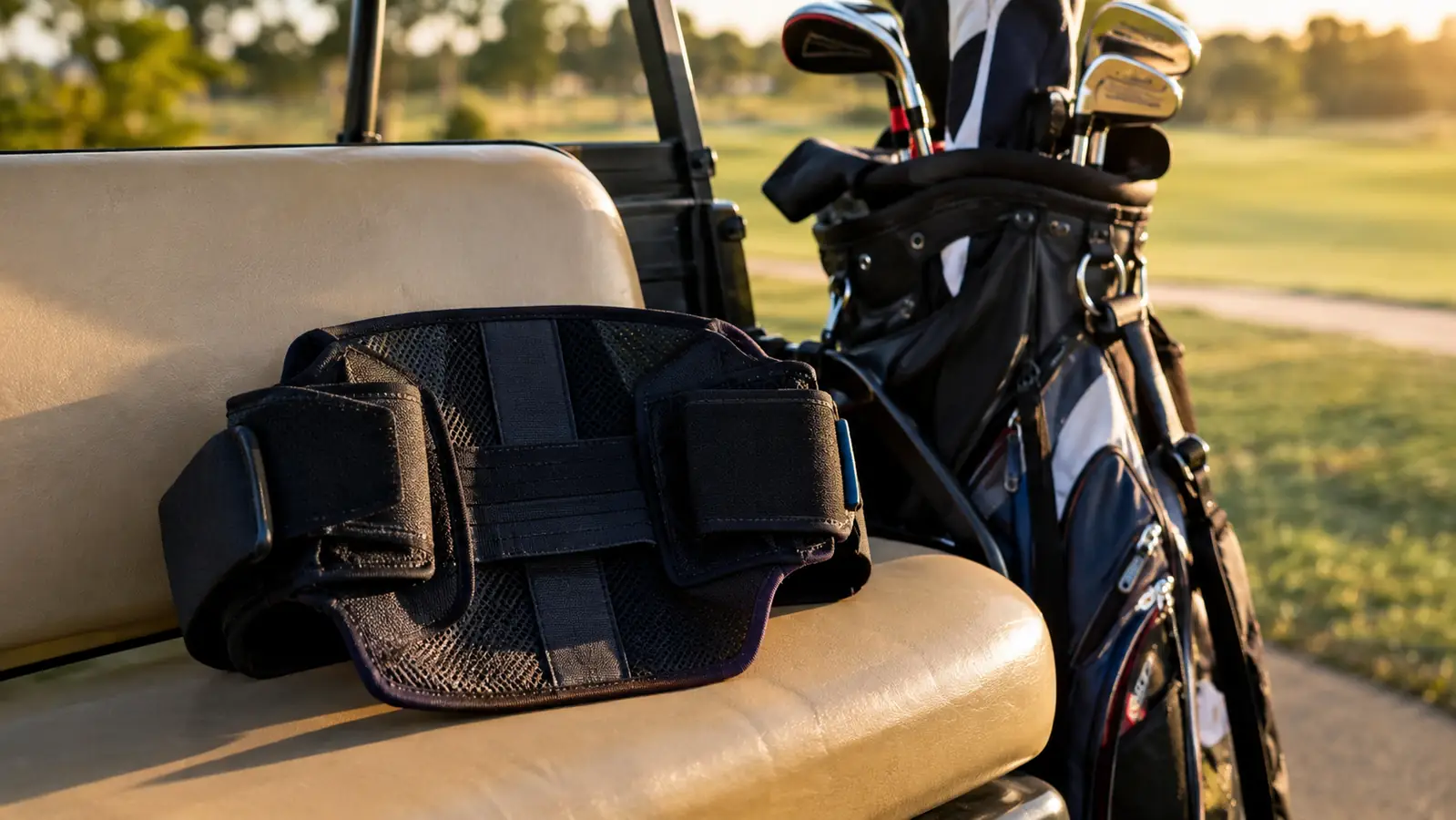
A padded lumbar panel, adjustable side straps, and breathable mesh. It does not fix anything, but it gives my back something to work against on the days it needs it most.
Amazon Check Today's Price on Amazon →It reminds me to stay braced through the whole swing
The Sparthos brace has a padded panel that presses against my lower back. That pressure is a physical reminder to keep my core braced from address to finish. On the days I wear it, I notice my posture on the first few holes is better, and I am not holding my breath over the ball. The reminder is strongest on the first tee, when my back is still tight from the drive over. I take a practice swing, feel the panel against my spine, and settle into my setup instead of rushing. By the third hole I am not thinking about it at all, which is the point.
It takes the edge off cold-morning stiffness
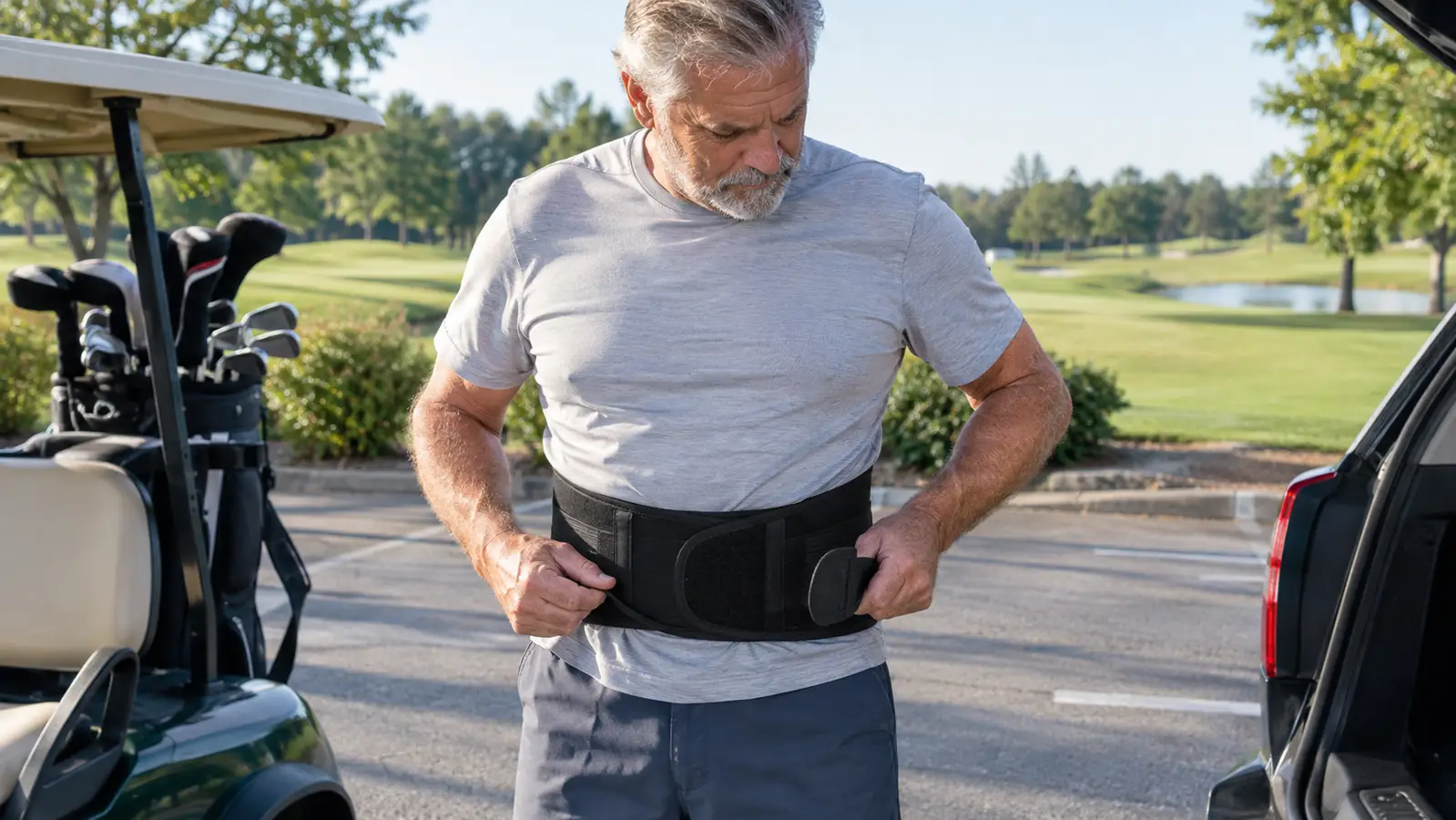
I play early, and an October tee time in Ohio is cold. The brace traps a little warmth against my lower back, which helps when the first few swings feel like I am swinging a fence post. I wear it over a thin undershirt on cold mornings, and the stiffness fades a few holes sooner. One Tuesday last fall it was 38 degrees at the parking lot, and I almost skipped the round. I put the Sparthos on over my undershirt, did my warm-up swings, and by the fourth hole I was reaching for my sweater instead of my back. It is not a heating pad, but it keeps the cold from settling in before I get loose.
It keeps me honest about my warm-up
Carol, my wife, is the one who told me to stop skipping my warm-up. The brace is part of that routine now. When I put it on in the parking lot, I do my Orange Whip swings and a few hip rotations before I touch a club. The brace does not warm me up, but it marks the start of the routine that does. On golf mornings the Orange Whip rides in the car with my clubs, so the routine is the same whether I am at my home course or a course I have never played. The brace goes on first, then the swings, then the first club comes out of the bag. That order has cut down the number of rounds where my first swing feels like a guess.
It gives me something to brace against on uneven lies
My home course is hilly, and a sidehill lie twists my lower back more than a flat one. With the brace snug, I feel more supported when I set up on a slope. It is not a cure, but it makes those shots feel less like a gamble with my back. There is a par 5 on the back nine where the fairway tilts hard to the left, and I used to stand over that second shot trying not to think about my back. Now I tighten the side straps a notch, take one extra practice swing, and commit. The ball does not always land where I want, but I am not guarding against a twinge while I swing.
It is easy to put on and take off between shots
The side straps adjust quickly, so I can loosen it on the walk to my ball and snug it up before I hit. I do not have to take my glove off or wrestle with clips. That matters on a course where I am walking nine holes. I have worn it on days when I walk all eighteen, and the adjustment takes about five seconds. Loosen it on the uphill stretches, snug it before a drive, loosen it again on the walk to the green. It never gets in the way of my glove hand, and it does not bunch up under my windbreaker when I reach for a club.
It does not slide up or bunch when I swing
The thing I worried about was a brace that rides up my back by the third hole. The Sparthos stays put through a full round. The breathable mesh helps too, because I do not end up soaked by the turn. I played a humid round in July, the kind where your shirt is damp by the second hole, and the brace was still in place on eighteen. It did not chafe, and it did not need adjusting every few holes. For a guy who walks when the weather allows, that is the difference between a brace I use and a brace I leave at home.
It fits under a windbreaker without looking like medical gear
I wear it over a thin undershirt and under my windbreaker, and nobody at the course has said a word about it. It is low-profile enough that I forget it is there, which is exactly what I want from a brace. The padded panel is firm but not bulky, so it does not change the way my windbreaker fits or make me look like I am wearing equipment. I have worn it through a full round with a light rain jacket over it, and it stayed comfortable the whole time. The mesh keeps it from feeling like a sauna, even when the jacket is on.
It helps me keep my tempo when my back is tired
By the back nine, a tired back makes me rush my swing. The brace gives me a little extra support, and that lets me focus on a smooth tempo instead of guarding against a twinge. My Orange Whip has taught me what smooth feels like, and the brace helps me keep it when I am tired. On a Saturday round last month, I was dragging by the fourteenth hole. I snugged the brace up, took a deep breath, and swung at about eighty percent. The ball went straighter than it had all day. That is not a swing tip, it is just what happens when my back feels supported enough to let my arms work.
It rides along in the side pocket of my golf bag
The Sparthos packs small, so it lives in the side pocket of my golf bag, which rides in the trunk of my car, and is always there when I get to the course. On a stiff morning I put it on in the parking lot before I walk to the first tee, and on a loose morning it stays in the pocket. It takes up almost no room, and it is the same brace I have worn for seventeen months. That is the whole point: support that is there when I want it and out of the way when I do not.
It is a reminder that my back needs maintenance, not just a brace
The honest truth is that the brace does not fix anything. It supports, it reminds, and it keeps me honest. The real work happens on the living-room rug with my foam roller and in the parking lot with my warm-up. The Sparthos is the part of that routine I can carry in my bag. I roll my upper back, glutes, hips and hamstrings most evenings after a round, and I never roll directly on my lower spine, my physical therapist told me not to. The brace is the piece that comes with me, the reminder that the maintenance is what keeps me playing three mornings a week.
What I'd Skip
I would skip wearing a brace on every single round. I wear mine roughly one round in three, on cold mornings and on days my back is already stiff. Wearing it all the time would let my back muscles lean on it instead of doing their own work. I would also skip wearing it while I sleep, and I would skip expecting it to fix a real injury. If your back hurts enough that a brace feels like a necessity every time you play, that is worth a conversation with a doctor or physical therapist, not just a trip to the golf shop. I saw a physical therapist for six visits when my back first acted up, and that is the advice I pass along. A brace is a tool, not a treatment plan.
The Sparthos does not fix my back. It supports it, reminds me to stay braced, and keeps me honest about the warm-up that actually does the work.
Pack it on the next stiff morning
If your lower back complains after a round, a lumbar brace is a cheap thing to try before you give up the game. The Sparthos is the one I keep in my bag.
Amazon Check Today's Price on Amazon →