
Four years ago, in the autumn of 2022, I spent a long afternoon on the driving range and stood up with a lower back that felt like somebody had poured concrete into it. I was 59 then, and I have been managing a stiff back ever since. It shows up as morning stiffness, as soreness the evening after a round, and as a swing that starts out careful and only gets freer by the back nine. My physical therapist, who I saw for six visits that winter, gave me the best piece of advice I have gotten in all of this: do not roll directly on your lower spine. Roll the muscles around it. The upper back, the glutes, the hips, the hamstrings. Loosen those, and the lower back gets out of the vice. That is where the TriggerPoint GRID earns its place in my living room.
I bought the 13-inch TriggerPoint GRID in January 2025, about 21 months ago now, after my wife Carol suggested I stop skipping the warm-up she kept watching me skip. It has sat on the living room rug most evenings after a round and for a few minutes most mornings ever since. It is not a cure. Nothing I own is a cure. It is a tool that gets the muscles around my lower back to let go, and that makes the difference between a round where I am swinging at the ball and a round where I am swinging around my back.
The roller that loosens my back before the first tee
The TriggerPoint GRID sits on my living room rug every morning I play. Here is the exact routine that gets my upper back, glutes and hips loose enough that my lower back stops doing all the work.
Amazon Check Today's Price on Amazon →Step 1: Upper back first, because that is where the tension starts
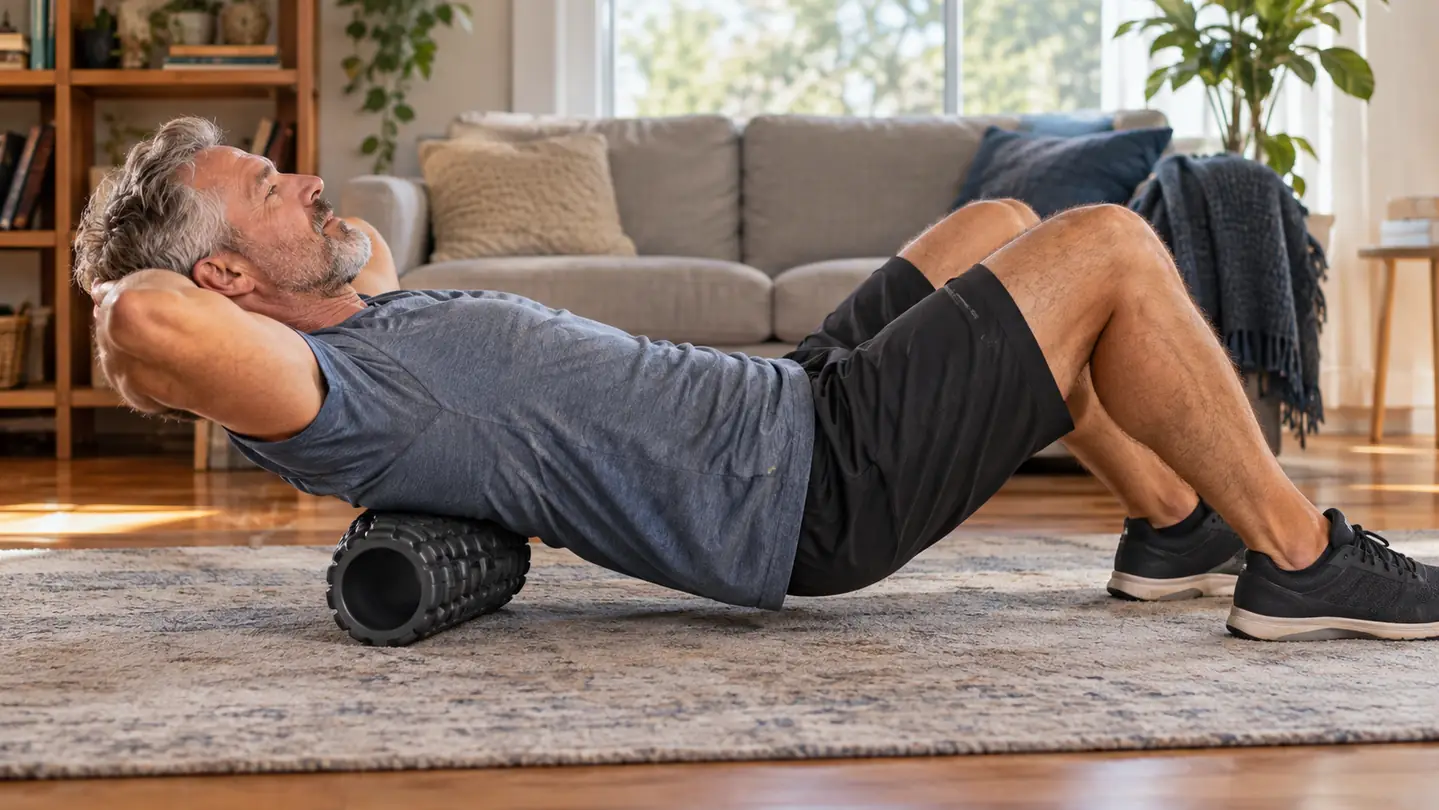
I start lying on the rug with the TriggerPoint GRID under my upper back, just below the shoulder blades, knees bent and feet flat. My hands go behind my head with the elbows pointing forward so my neck stays relaxed. Then I do small rolls, no more than a few inches at a time, and let the grid surface find the spots that feel like knots. When I hit one, I stop and just breathe on it for ten or fifteen seconds before I move on.
The first time I tried rolling, at my physical therapist's office, the roller she handed me was smooth. It felt fine on the upper back but it was too gentle to do anything to the knots between my shoulder blades. The grid surface on the TriggerPoint GRID is what actually reaches those spots without me having to drive my whole body weight into the floor. That is the reason I bought this roller instead of a plain one.
I do the upper back first for a reason. When my upper back is tight, my shoulders round forward and pull my whole posture into a crouch, and a crouched posture means my lower back has to carry the rotation of the swing by itself. Loosening the upper back takes pressure off the lower back before I ever touch the glutes. I spend three or four minutes up here, which sounds like a lot, but this is the part that leaves me feeling less stiff after a round. By the time I move down, I can feel the difference in how easy it is to stand up straight.
One Saturday last spring I skipped this part to save time before a 7:30 tee time, and I paid for it by the fourth hole. My shoulders crept up toward my ears on every backswing, and I spent the front nine trying to loosen up instead of playing golf. The roller was on the rug when I got home, and I have not skipped the upper back since.
Step 2: Glutes, because the hips do not move on their own
The glutes are the biggest muscle group in my body and the one I ignore the most. My therapist explained it this way: when the glutes are tight, the hip joint does not rotate the way it should, so the lower back twists instead. That is exactly what happened on that range afternoon four years ago. My hips felt tight and locked up, and my lower back took the strain.
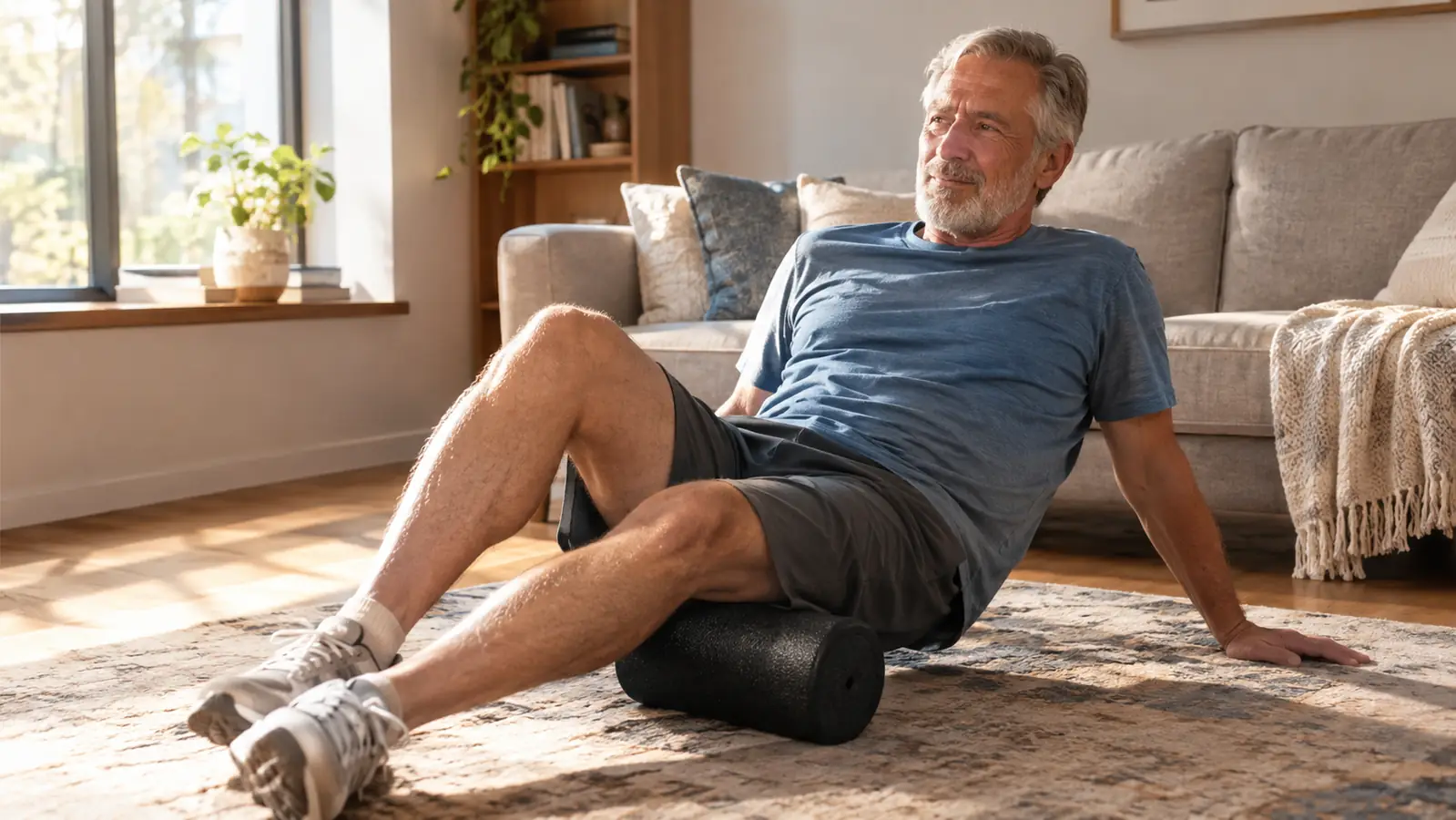
For the glutes I sit on the TriggerPoint GRID with the roller under one side, then shift my weight onto that glute and roll from the hip bone back toward the lower back. To get a little deeper, I cross the ankle of the other leg over the knee of the rolling side, which opens the hip up. The grid surface is firm enough that I feel it working without feeling like I am lying on a rock. I do about a minute on each side and stop to hold on any spot that is particularly angry.
This step does more for my setup than any other part of the routine. When my glutes are loose, I can hinge forward at the hips at address instead of bending from the waist. That one change keeps my lower back in a much better position through the whole swing, and it is the difference between a back that finishes the round and a back that complains about it. On days I ride a cart instead of walking, I add a couple of extra minutes on the glutes that evening, because four hours sitting in a cart tightens them right back up.
The first few weeks I owned the roller, I rushed this step because it was not comfortable. It took me about a month to learn that slowing down and actually pausing on the tight spots is what does the work. Ten seconds of just breathing on a spot gets me further than a minute of quick rolling over it, and that is true for every step in this routine.
Step 3: Hips, including the hip flexors that get tight from sitting
I drive to the course, I sit in a cart, and I sit at dinner. My hip flexors are shortened from a lifetime of sitting, and shortened hip flexors tilt the pelvis forward, which arches the lower back. An arched lower back is a locked lower back. It cannot rotate.
To work the outside of the hip, I lie on my side with the TriggerPoint GRID under the meat of the hip, just below the hip bone, and roll slowly down the side of the leg. It is not a comfortable spot, and the first few passes genuinely hurt, so I keep my breathing steady. The second round of passes is always easier, which is how I know it is working. I do thirty to forty-five seconds on each side.
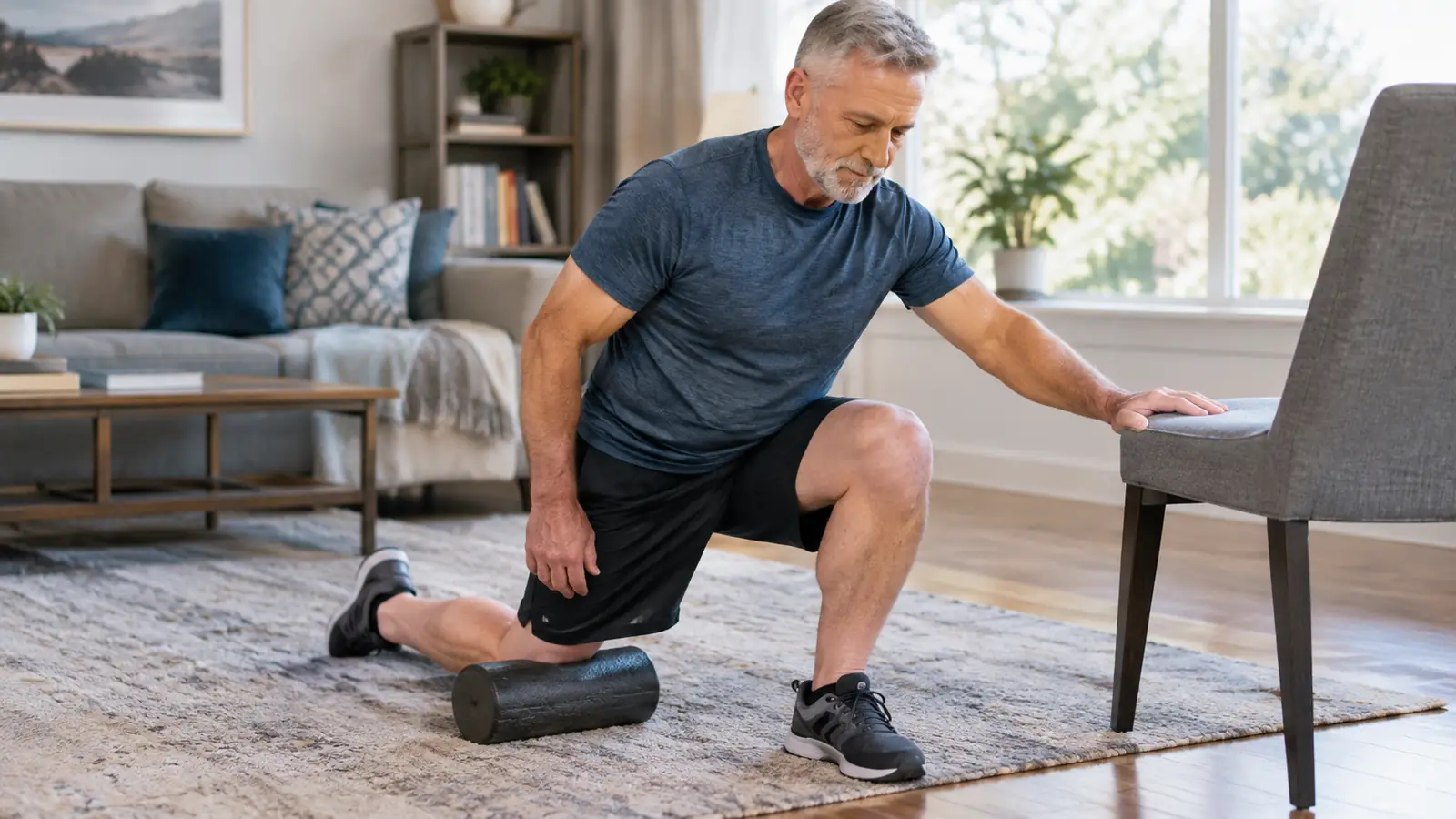
For the hip flexors themselves, I kneel with one knee on the roller and the other foot flat on the floor, then gently press the front of the hip forward until I feel the stretch at the top of the thigh. That stretch, combined with the rolling, is what lets me get my left hip through the ball on the downswing instead of sliding past it. When my left hip stays where it should be, I can rotate through the shot. When it does not, my lower back saves the swing, and my lower back is tired of saving the swing.
Sunday afternoons I play pickleball with a few friends, and Sunday evening the roller gets an extra session on the hips because pickleball is nothing but short, quick stops and starts. Carol noticed the connection before I did. She pointed out that I moved fine Monday mornings when I had rolled Sunday night and stiff again when I had not. The garage is unheated, and on a cold morning tight hips are the first thing I feel when I try to take the club back. The routine on the living room rug is what gets me to the first tee ready instead of hoping the first three holes will warm me up.
Step 4: Hamstrings, the missing link between hips and lower back
Tight hamstrings pull the pelvis backward, which flattens the lower back and makes it hard to hold posture through the swing. For years I thought my hamstrings were fine because I could touch my toes in the morning. Then my therapist had me roll them, and I found out how wrong I was. There were knots in there I had never felt because nothing I did ever reached them.
I sit on the floor with the TriggerPoint GRID under one thigh and roll from the back of the knee up toward the glute, then back down. I keep the leg relaxed and let the grid do the work. The hamstrings are where the roller feels the most intense for me, so I do not rush this step. A minute per leg, with pauses on the tight spots, and I do not try to straighten the leg while I am on a knot because that just makes the muscle grab harder.
The payoff shows up in my address position. With looser hamstrings I can keep my spine angle consistent through the swing, and I am not fighting to hold my posture from the first tee to the eighteenth green. I also noticed, a few weeks into owning the roller, that the soreness the evening after a round moved from my lower back to my legs, which is where it belongs after walking eighteen holes.
I do the hamstrings last in the morning routine on purpose. Once the upper back, glutes and hips have let go, the hamstrings respond faster, and the whole chain feels connected by the time I stand up. When I skip the hamstrings, the lower back feels fine for the first few holes and then starts to tighten around the middle of the round, which tells me I missed a link.
Step 5: The morning-of routine, and what I do the evening after a round
On mornings I play, I do a shortened version of the whole routine: upper back, glutes, hips, hamstrings, about eight to ten minutes total on the living room rug before I head out. I have learned that doing it before the round is worth twice what doing it after the round is worth, because a loose back lets me swing the way I actually know how to swing. A typical Tuesday starts with coffee, then the roller, then out the door for a 7:30 tee time, and I do not leave without the routine anymore.
After a round I do the same routine again in the evening, but slower and with longer pauses on the spots that are sore. After that evening session I usually wake up the next morning a little less stiff. On days I ride a cart instead of walking, I add a few extra minutes on the glutes and hips, because sitting in a cart for four hours tightens everything back up. Walking the course is better for my back than riding, so I walk whenever the weather allows.
The routine is not only for golf days. In the winter, when the course is closed, I still roll on the living room rug before I head out to the garage to hit balls off the GoSports mat into the old net I hung up years ago. Hitting off a mat is exactly the kind of repetitive motion that made my back seize in the first place, so the roller is the part I never skip, even when I am only going to hit thirty or forty balls.
I have been doing this for about 21 months now. The morning stiffness is still there some days, but it is not the wall it used to be. The difference is that I have a way to do something about it that does not involve a pill or an appointment. And if the back is genuinely bad, sharp pain or something that does not settle down after a few days, I skip the golf and call the physical therapist. The roller is not a substitute for that, and I do not want anyone reading this to treat it like one.
What Else Helps
The TriggerPoint GRID is the centerpiece of my routine, but it is not the only thing I use. On cold mornings I wear a lumbar support brace over a thin undershirt, about one round in three, because the support and the reminder to stay braced help me keep my posture when my back is already stiff. I also swing the Orange Whip in the backyard most mornings I play, a few minutes of smooth, unhurried swings to remind my body what good tempo feels like, and I take a few swings with it in the parking lot before a round. At the range I lay a pair of Callaway Alignment Stix on the ground, one along the target line at my toes and one along the ball line, to keep my setup square, because a square setup means less compensating in the swing, and less compensating means less twisting from the lower back.
None of these things fix anything on their own. The brace does not heal, the whip does not stretch, and the sticks do not align me by themselves. They all work together as a system: the roller loosens the muscles, the whip teaches the tempo, the brace supports the posture, and the sticks keep the setup honest. If I had to pick one to keep, it would be the roller, because loose muscles make everything else easier. And if you are dealing with real pain, not just stiffness, see a doctor or a physical therapist first. That is the advice I got, and it is the advice I would give.
The morning stiffness is still there some days, but it is not the wall it used to be. The roller does not cure my back. It just makes the muscles around it let go, and that is enough.
Start with the roller, and give it a month
The TriggerPoint GRID is the one piece of my routine I would not give up. It takes ten minutes on the living room rug, and it has made more difference to my back than anything else I have tried. Check today's price on Amazon and start with the morning routine above.
Amazon Check Today's Price on Amazon →