

I will tell you the honest part first: the Sparthos back brace did not fix my back. No brace fixes a back. What it did, over the seventeen months I have owned it, is make the stiff mornings and the sore evenings easier to get through, and it gave me something to reach for on the days when my lower back already felt tight before I even reached the first tee. That is a smaller promise than the product page makes, and it is the one the brace actually keeps.
I am Russ, a 63-year-old retired shop teacher who plays golf three times a week at a public course outside Cleveland. My back first gave me trouble about four years ago after a long range session, and since then it has been a morning-stiffness kind of problem, with a sore evening after a round if I push it. I bought the Sparthos in May 2025, size L, and I have worn it for roughly one round in three since then. Here is what nobody tells you before you buy one.
The Quick Verdict
A well-made lumbar support that does exactly what a brace can do: remind you to stay braced and take the edge off a stiff lower back. It will not fix the underlying problem, and it is not a warm-up replacement. Buy it for the days your back already feels tight, not as a cure.
Amazon Check Today's Price →What I Liked
- Padded lumbar panel is genuinely comfortable, even through a full round
- Side straps adjust easily and hold their setting for eighteen holes
- Breathable mesh makes it wearable in July heat
- Still in good shape after seventeen months of regular use
Where It Falls Short
- It supports and reminds, but it does not fix the underlying problem
- Easy to lean on it as a crutch and skip the warm-up it should supplement
- The side straps have loosened a touch with age
- On the hottest days you always know you are wearing it
The brace I reach for on stiff mornings
The Sparthos lumbar brace is the one I keep in my golf bag for the days my back already feels tight before the first tee. It supports, it reminds, and it does not pretend to be a cure.
Amazon Check Today's Price on Amazon →How I Have Used It
I bought the Sparthos in May 2025, a couple of years after my back started acting up in earnest. Early on, I wore it on every stiff morning, partly because it was new and partly because I wanted to see if it would make a difference. It did, in a modest way. On the days I wore it, I noticed I was not thinking about my back as much by the back nine. I kept a mental note of which rounds felt better, and the pattern held up well enough that I stopped keeping track. That is the real benefit, and it is worth naming plainly: the brace does not make the pain disappear, it makes me feel more supported so I can swing without flinching.
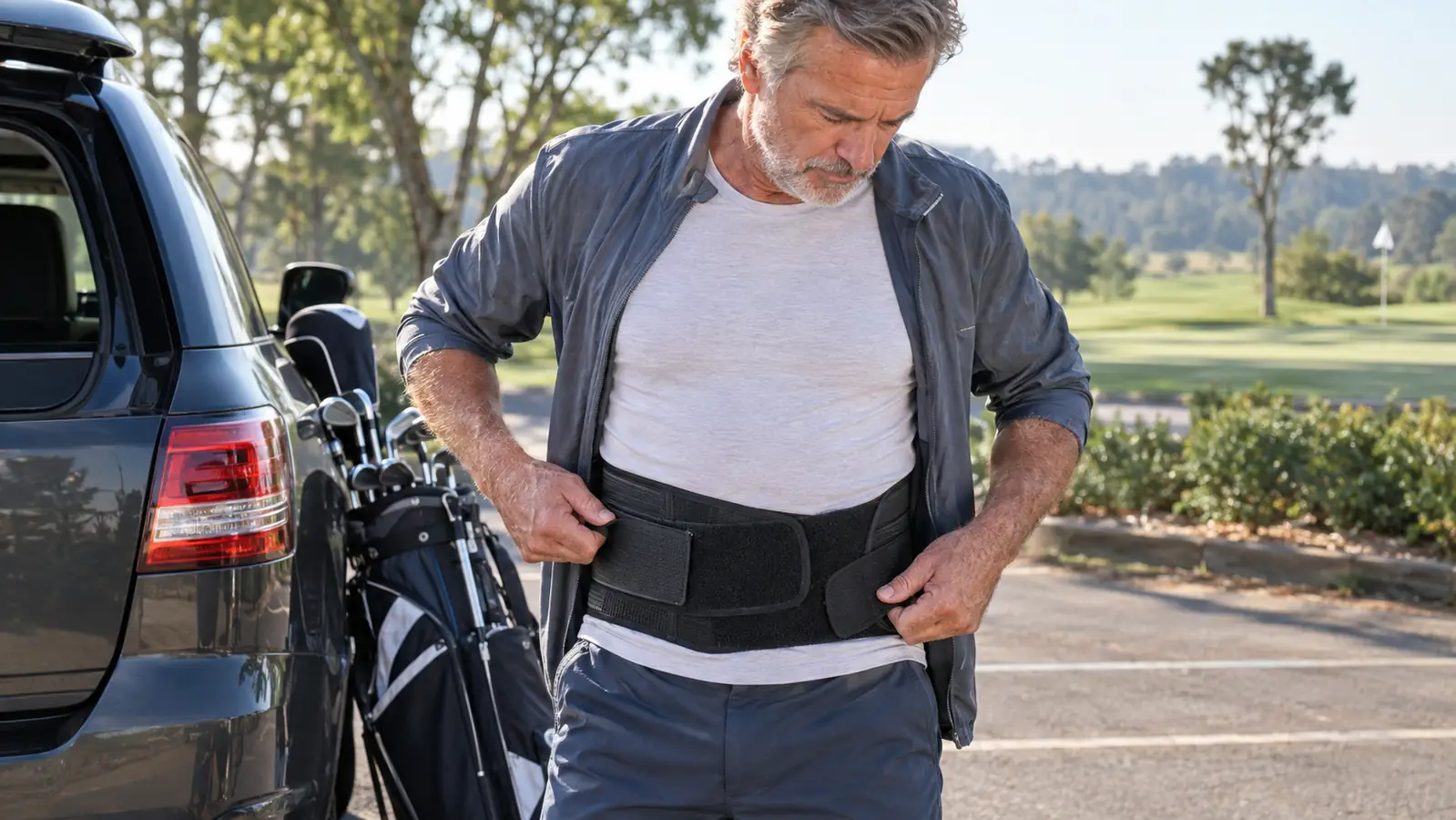
These days I wear it about one round in three. The deciding factor is how my back feels when I wake up. If it is stiff, the Sparthos goes on over a thin undershirt in the course parking lot. If I feel good, I leave it in the car, and I have never once regretted that. One morning last fall I woke up so tight I almost called the course to see if I could move my tee time to the afternoon. I did my usual ten minutes of stretching anyway, put the brace on, and by the third hole I had stopped thinking about my back. That was the round that taught me the brace is a tool for the days you need it, not a piece of equipment you have to commit to forever.
I have also learned when not to use it. I never wear it while sleeping, and I do not strap it on for a full day of running errands. A brace that becomes a habit everywhere stops being useful where it matters. It is a golf-course brace for me, and keeping it to that one job is part of why it still fits well and still does its job after seventeen months. The evenings after a round are when the foam roller earns its keep, not the brace.
Comfort: What It Feels Like to Wear
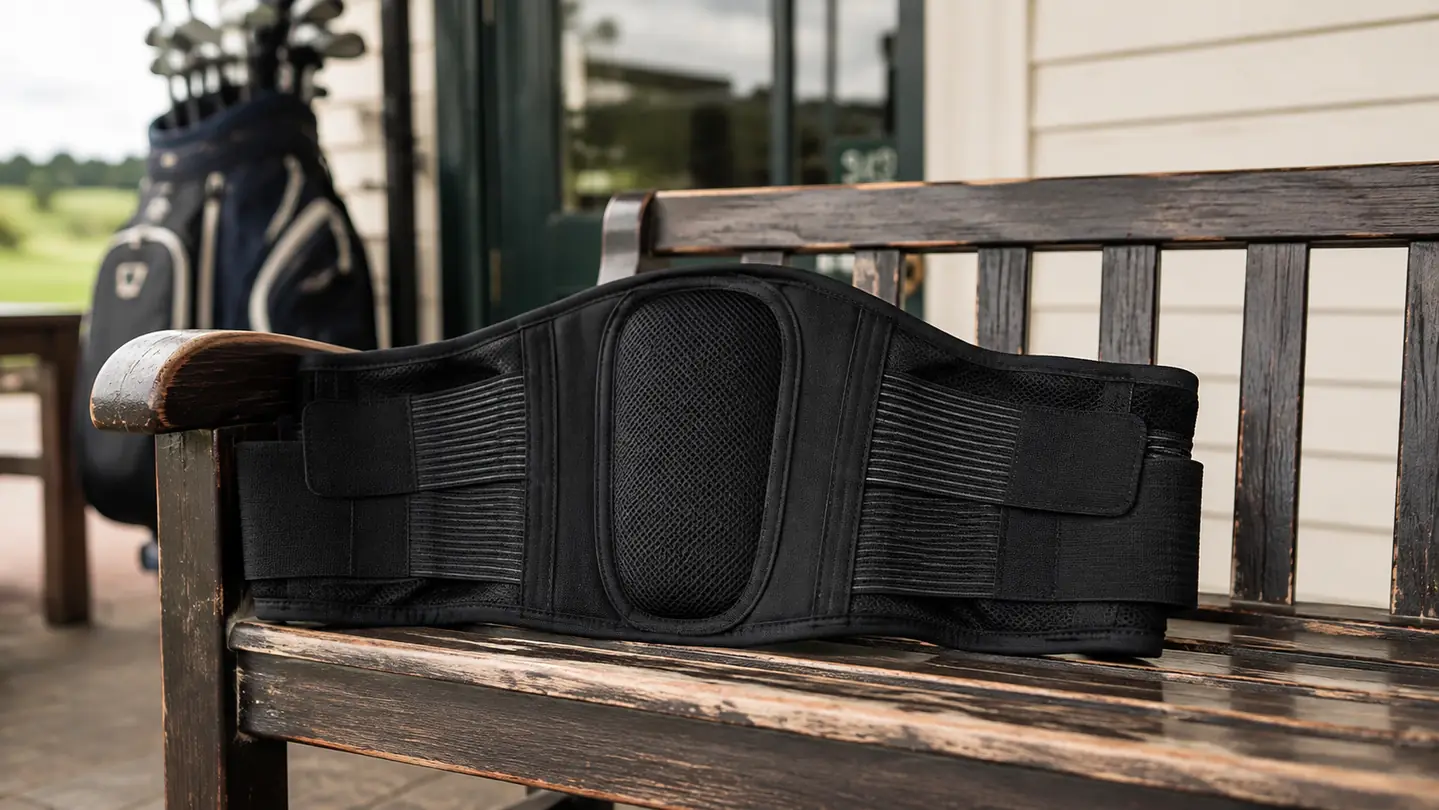
The first thing you notice is the padding. The Sparthos has a padded lower-back panel that sits against the lumbar area, and it is genuinely comfortable against the skin, even on a warm morning. The padding is firm enough that you know it is there, but soft enough that it does not dig in when you bend to line up a putt. That is the detail cheap braces get wrong, and this one gets it right. The mesh material breathes, which matters more than you would think when you are walking the fairway in July. I have worn it through a full round in the heat and it never felt like a rubber band wrapped around my midsection.
The side straps are adjustable, and this is where the fit lives or dies. Too loose and the brace slides up when you bend to tee up a ball. Too tight and you spend the whole round thinking about the brace instead of your swing. I found the right setting by starting loose and tightening one notch at a time over the first few rounds. I check the fit in the parking lot before the first tee, the same way I check my grip. Thirty seconds of adjustment beats three holes of fiddling. The brace stays put through a full swing, which is the test that matters for a golfer. The straps hold their setting through eighteen holes, and that consistency is what lets you forget you are wearing it.
One honest complaint: on the hottest days, even with the mesh, you know you are wearing it. It is not invisible, and anyone who tells you a lumbar brace disappears under your shirt is selling something. The tradeoff is worth it on a stiff morning, but I would not wear it in August heat unless my back really needed it. The real test came on a hot Tuesday in July when I walked all eighteen holes carrying a light stand bag. By the turn I expected to be tugging at the brace the way you tug at a collar that is too tight. I was not. The mesh did its job, and the padded panel stayed where it belonged even after I bent over to tee up on every par three. The only time I really noticed it was reaching down to pick my ball out of the cup, and even then it was a reminder, not a complaint.
The brace does not make the pain disappear, it makes me feel more supported so I can swing without flinching.
Fit: Getting It Right Takes a Few Rounds
The Sparthos comes in sizes, and I will be direct about this: the size chart is a starting point, not a promise. I am a size L and the L fits me well, but I have heard from a friend at the course that the same size ran big on him. Measure where you will actually wear the brace, not where you wear your pants. That is the mistake my friend made. He measured at his belt line, the brace rode too high, and he nearly returned it before he figured out the problem. If you are between sizes, I would size down and use the side straps to fine-tune. The straps give you a surprising amount of adjustment range, which is the saving grace of the design.
The other fit detail nobody mentions is where the brace sits. It needs to sit low, with the padded panel covering the lumbar curve, not up around your waist like a belt. Early on, I wore it too high, up around my waist like a weightlifting belt and spent the first three holes wondering why it was not helping. By the fourth hole I was in the cart fiddling with it, and my playing partner finally asked what I was doing. I pulled it down so the padding lined up with my lower back, and the difference was immediate. Read the instructions, then read them again.
I also learned to wear it over a thin undershirt, not against bare skin. The mesh is breathable, but a layer between the brace and your skin keeps it from shifting during a swing and makes the whole thing more comfortable on a long round. The undershirt also keeps the straps from bunching your golf shirt every time you bend over. That is the kind of detail you only figure out by wearing it, and it is worth knowing before your first round with it.
What Nobody Tells You Before You Buy
Here is the part the product page does not put in bold letters: the Sparthos back brace is a reminder, not a repair. It reminds you to keep your core braced and your posture honest, and that reminder is genuinely useful on the course. But if your back hurts because you skipped your warm-up, the brace will not undo that. It will just make the round more bearable while you pay for the skipped warm-up. I found that out on a Thursday in September. I skipped my warm-up, grabbed the brace out of the car, and played nine holes that felt like eighteen. The brace kept me from making things worse, but it did not give me back the mobility I had thrown away by skipping the stretching. I finished the round stiff anyway. That was the afternoon I understood the difference between support and prevention.
The second thing nobody tells you is that the brace can become a crutch if you let it. I noticed early on that I was reaching for it on days when I did not really need it, just because it was there. My wife Carol, who does not golf but watches me hobble around the house after a bad round, was the one who pointed out that I was using the brace to skip my warm-up. She was right. The brace is not a substitute for the ten minutes of stretching and easy swings I do before a round. It is a supplement to it. Now the brace goes on after the warm-up, never instead of it. That ordering took me a few months to get right.
The third thing is the one I wish someone had told me: the brace will not fix the underlying problem. If your back is genuinely hurting, see a doctor or a physical therapist. I saw a physical therapist for six visits back when my back first acted up, and the exercises I learned there have done more for me than any piece of equipment. Those visits were in the winter right after the range session that started all this, and I still do some of those exercises most mornings. The Sparthos does not replace them. It works alongside them, and it works best when I remember which one is doing the real work. The brace is a tool that makes the bad days easier. It is not a treatment, and anyone who tells you otherwise is overselling it.
How It Holds Up Over Time
Seventeen months in, the Sparthos still looks and works like it did the day I bought it. The straps have not stretched out, the padding has not flattened, and the mesh has not torn. I have washed it a few times by hand and hung it to dry, and it has held up fine. For a piece of gear I wear a few times a week, that kind of durability is hard to argue with.
The one thing I would watch is how tight you pull the side straps. They are still holding after seventeen months, but they have loosened a touch since it was new. That is normal for any brace, and it is not a reason to avoid the Sparthos. It is just a heads-up that nothing lasts forever, and a brace you wear a few times a week will eventually need replacing.
I have also learned that the brace works best as part of a routine, not as a standalone fix. On the days I wear it, I also do my warm-up, I roll out my back on the foam roller in the evening, and I try not to do anything stupid like lifting a heavy bag of mulch without bending my knees. The brace is the most visible part of that routine, but it is not the most important part.
Who This Is For
The Sparthos back brace is for the golfer who has a stiff lower back on the days they play, and who wants something that takes the edge off without getting in the way of their swing. It is for the person who has already done the sensible things, like seeing a physical therapist and learning a few exercises, and who wants a little extra support on the days the back is being difficult. It is for the golfer who understands that a brace is a tool, not a cure.
If that sounds like you, the Sparthos is a good choice. It is comfortable, adjustable, and durable, and it does exactly what a brace should do. It will not fix your back, but it will make the rounds more enjoyable while you do the work that actually fixes it.
Who Should Skip It
Skip the Sparthos if you are looking for a cure. If your back pain is severe, worsening, or accompanied by numbness or weakness in your legs, do not buy a brace. See a doctor or a physical therapist. A brace is not a substitute for medical advice, and I would be doing you a disservice to suggest otherwise.
Skip it too if you are not willing to wear it correctly. The Sparthos only works if you take the time to get the fit right, wear it low over the lumbar curve, and use it on the days it makes sense. If you are looking for something you can strap on once and forget about, this is not it. It is a tool that rewards attention, and it will disappoint you if you do not give it any.
The honest bottom line on the Sparthos
It will not fix your back, but it will make the stiff days easier. If you want a comfortable, adjustable lumbar brace that does its job without pretending to be a cure, the Sparthos is worth a look.
Amazon Check Today's Price on Amazon →