
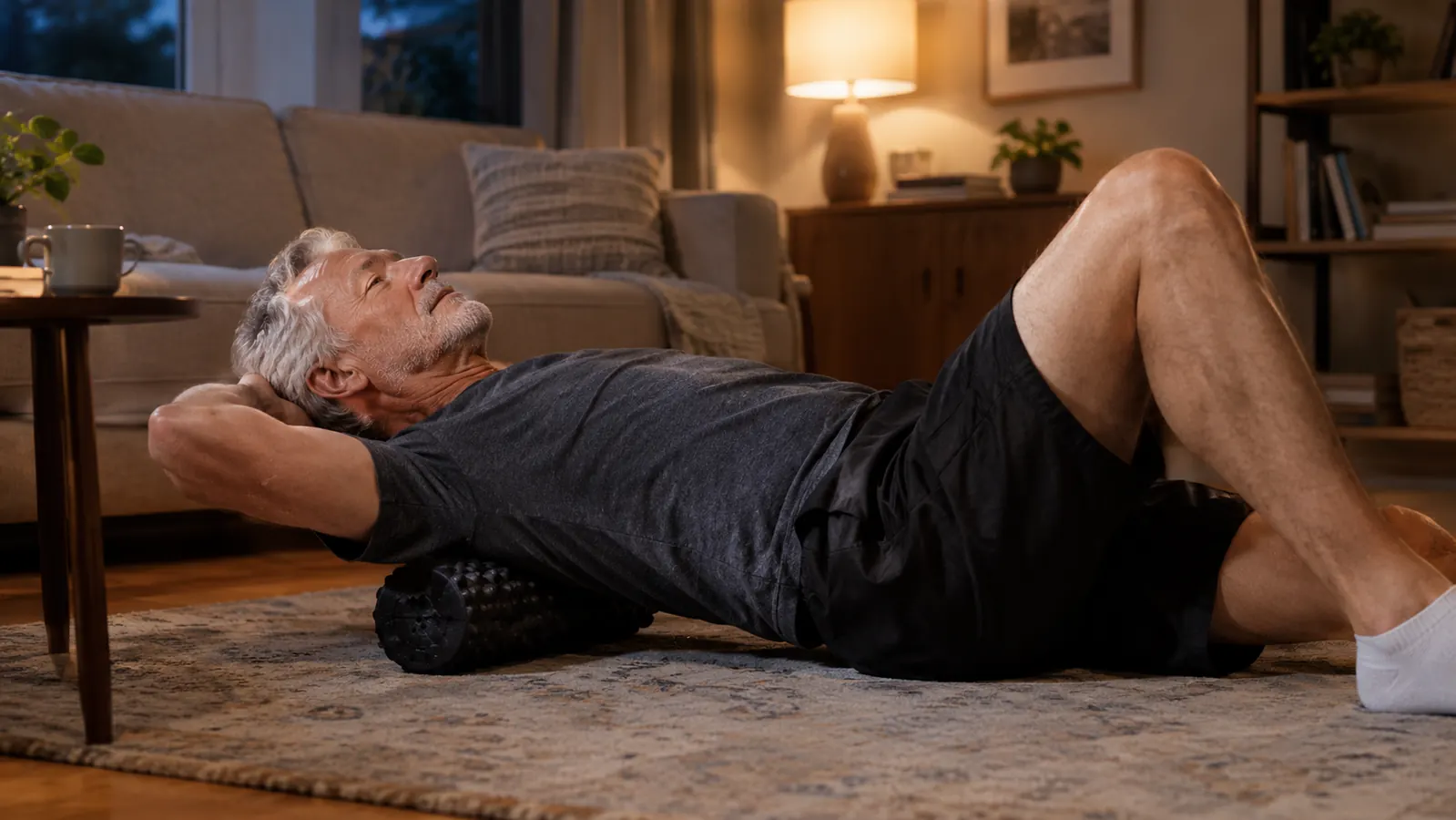
The first time I used the TriggerPoint GRID, I said a word in my living room that I will not repeat here. That grid is firm. Firm in the way I meant when I told a shop student his cut was "good and straight" and what I really meant was that he had an hour of cleanup ahead of him. I bought my GRID in January of 2025, about twenty-one months ago now, and it still sits on the rug next to the armchair. That already puts it ahead of most things that have come through this house with a promise printed on the box.
People ask me the same question whenever the roller comes up at the clubhouse: is the name-brand roller really worth more than the cheap smooth one they sell at the hardware store? I can answer it honestly, because I have rolled with the smooth kind before, a friend's in his garage and the one at the physical therapist's office back when my back first gave out four years ago. This is the part that does not make it onto the packaging.
The Quick Verdict
The firm grid grabs a muscle instead of squishing it, which is exactly what a stiff upper back needs; the honest catch is that it is firm, and it only helps if you actually use it.
Amazon Check Today's Price →The roller that earned its spot on my rug
If a stiff back is costing you the top of your swing, the TriggerPoint GRID is the recovery tool I actually reach for, twenty-one months and counting.
Amazon Check Today's Price on Amazon →How I've Used It
Mine lives on the living-room rug, not in the garage and not in a closet. That placement is the whole trick. I use it most evenings after a round and for a few minutes on most mornings, and I would not use it anywhere near that often if I had to go dig it out of a pile. One thing I learned the hard way is to wait a few minutes after a round before I start. If I walk in from the course and drop straight onto the rug, my back is still hot and the grid is too sharp. I pour a glass of water, change my shoes, and then roll. That little pause is the difference between a routine that hurts and a routine that helps.
I roll my upper back, my glutes, my hips, and my hamstrings, in that order, and I stop well before my lower spine. My physical therapist told me not to roll directly on the lower spine, and that is worth repeating here because the firm surface feels like it would be perfect right on the sore spot. It is not. The sore spot is not the place for this tool, and no amount of pressure makes that true.
What surprised me is how my opinion changed. The first week I was sure I had bought something too hard for a man my age. By the second month I could find the tight spots by feel, and now a few minutes on the grid beats the way I used to feel when I just stretched and hoped. It is still firm. My opinion is what softened.
What Nobody Tells You About the Grid
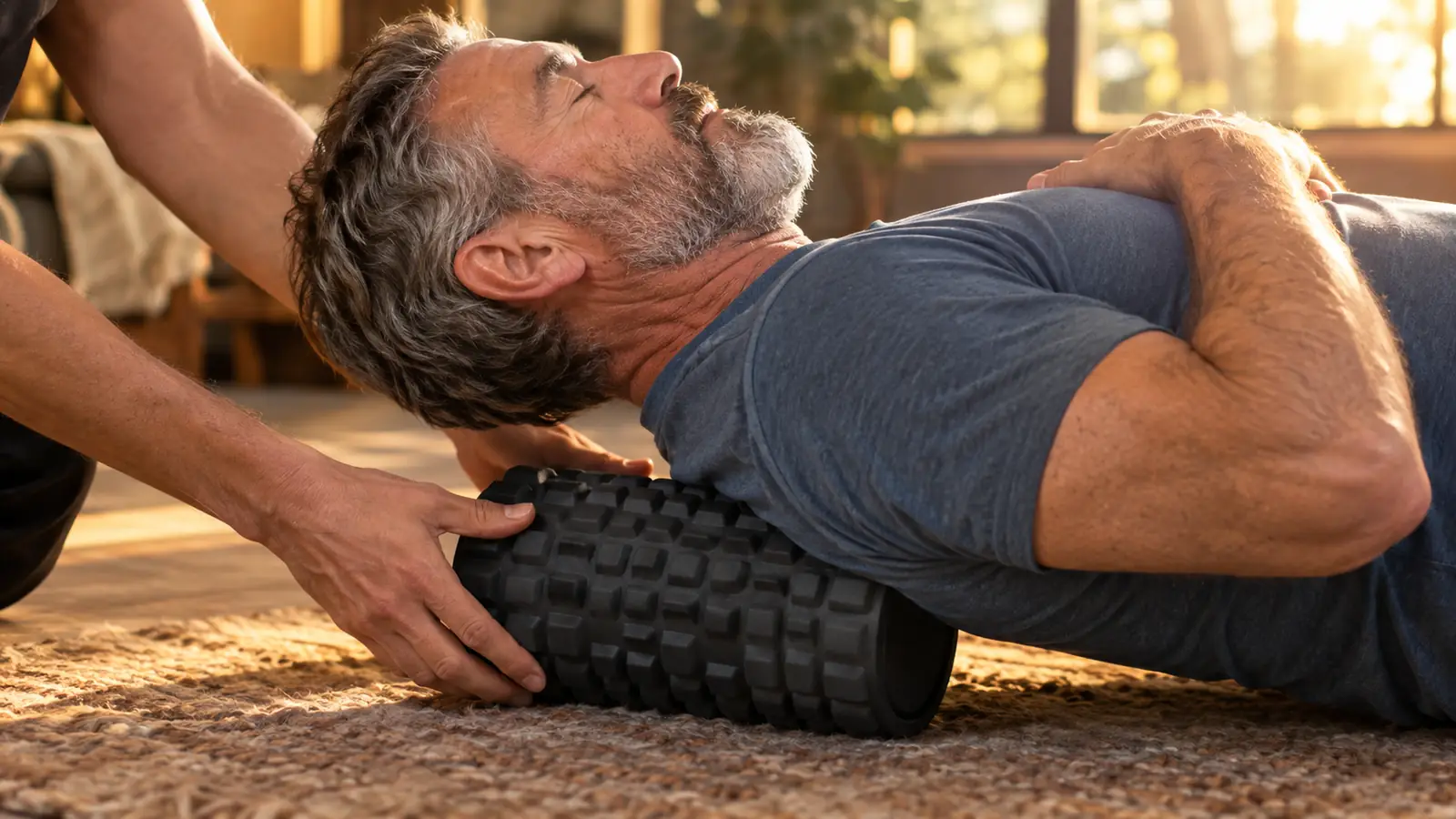
The honest part that does not make it onto the box is that this roller is firm and the grid is not decoration. The surface is a pattern of raised bumps and channels, and it grabs a muscle instead of squishing it. On a smooth roller, my upper back just floats on top of the foam. On the GRID, the surface catches the meat of the muscle and works it. That is the entire difference, and you only feel it the first time you pull a tight spot across it.
The hollow core is the other half of the story. Because the roller is hollow, it does not give much, which is exactly what you want when you are trying to put pressure on a knot. The firmness is a feature, even on the nights it feels like a bug. In the first month I had plenty of nights where I lasted thirty seconds and quit because it hurt. Thirty seconds is still better than nothing, and by the third month I was staying on for ten minutes without looking at the clock.
I will give you two honest complaints, because an honest review owes you them. First, mine only works on the rug; on a hard floor the grid is too harsh and I would not want to roll on tile or concrete. Second, the grid punishes rushing. If you move fast, it digs in harder and you will quit. You have to move slow, let the muscle settle, and breathe. That is not a sales pitch. That is how a tool with this much bite behaves.
And if you have never rolled before, the honest advice is to start gently and build up. There is a real chance your first session will make you wince. That is normal, and it passes. What does not pass is buying a firm roller and then never touching it because nobody warned you it was going to be firm.
Twenty-one months and every round I have played since, the grid still bites the way it did the first week. That is more than I can say for anything else I keep in this house.
What It Actually Does for My Back (and What It Does Not)
Let me be plain about what a roller is and is not, because the packaging will never tell you. The TriggerPoint GRID does not treat anything. It does not diagnose, it does not cure, and this is not medical advice. What it does is simpler and still worth having: it helps with the stiff feeling. When my back is stiff in the morning, or sore the evening after a round, ten minutes on the rug loosens the muscles in a way that stretching alone never did for me.
I picked up this back strain about four years ago after a long range session, and that winter I saw a physical therapist six times. That is the advice I give anybody with real pain: go see somebody who knows backs. The roller is what I use on the days in between. It is the part of the routine that keeps me from walking onto the first tee with a back that is already talking to me before I have taken a swing.
What it does not do is fix the underlying strain, and nobody should pretend it does. It does not replace those six visits, it does not belong on my lower spine, and if rolling ever makes true pain worse, the right move is to stop and get someone to look at you. That is the honest version, and it is the version that has kept me reaching for the same roller twenty-one months later.
I also use it on the days I do not play. The few minutes most mornings are the ones that matter most, because that is when the stiffness is at its worst. It is not dramatic. It is just a small thing I do, and small things done often are what keep a sixty-three-year-old swinging a club three times a week.
Why the Routine Matters More Than the Roller
Nobody tells you that the roller is the easy part. The hard part is the routine. I keep mine out in the open, on the rug, in the way. That is deliberate. If it lived in the garage, I would use it once a week and then forget about it, and a roller that sits unused is worth exactly nothing.
My order is always the same: upper back first, then glutes, then hips, then hamstrings, and I stop before the lower spine. I move slow, I breathe, and I stay on each spot long enough for the muscle to let go, which is usually a few slow passes. On a morning when my back is already stiff, I am gentler and shorter. The roller is not a punishment, and it should never feel like one.
What I found over twenty-one months is that the evening roll became part of the day, like pickleball with my friends on Sunday afternoons or the three mornings a week I get out before the dew dries. That consistency is the only reason I can answer the cheap-roller question honestly. A tool you use every week is worth more than a tool you admire from the shelf.
The consistency is also why I can answer the cheap-roller question at all. A friend of mine borrowed a roller like this once, used it for a week, and put it in his basement. He will tell you rollers do not work. What he means is that he did not use it. There is no roller on earth that fixes a back from a shelf.
The Cheap Roller Question
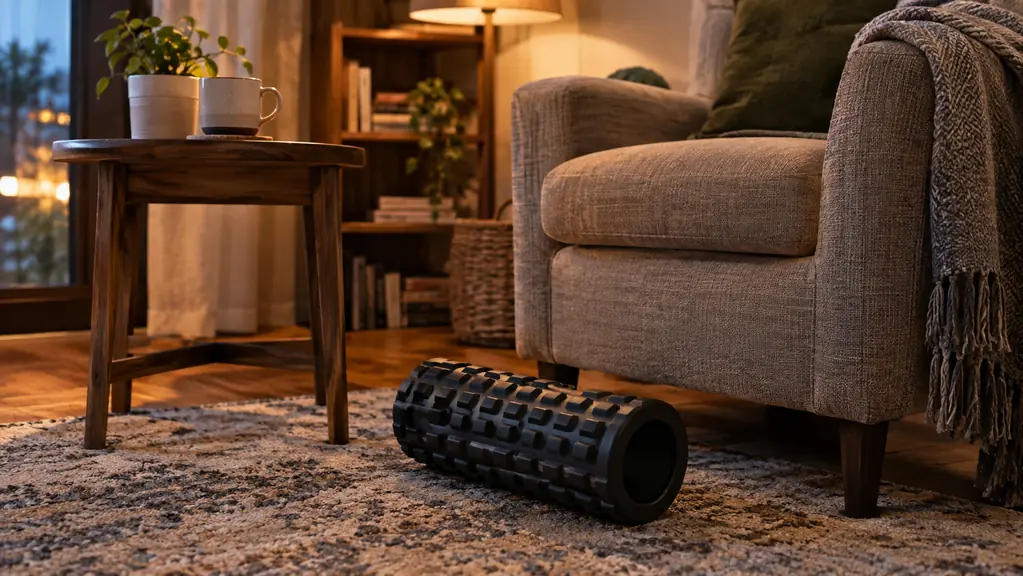
So is the TriggerPoint worth more than the smooth foam roller? Here is my honest answer after about twenty-one months of using one. The smooth roller is softer, and it is fine for a calf or a thigh on a day when all you want is some pressure and not a project. I have used the smooth kind at a friend's house and at the therapist's office, and it does a job. But for the spots that bother a golfer my age, the upper back and the glutes especially, the grid grabs where the smooth one slides. That bite is the difference, and it is a difference I feel the next morning.
If you are new to rolling and not sure your back will tolerate it, the smooth roller is a fair place to start. It is gentler and it costs less, and I am not going to pretend otherwise in an honest review. But if you already know your back gets tight and you want something that actually works a muscle instead of just pressing on it, the GRID is the one I would buy again. I have bought the cheap version of plenty of things in my life, and most of them are in a box in the garage. This one is on the rug.
The 13-inch size is part of the answer too. It is easy to handle on the rug, easy to put away, and easy to move exactly where I need it. A longer roller would not fit my routine any better, and a smaller one would not cover my upper back in one pass. This size is the one that actually works in a living room without taking over the place.
I should also say the GRID has held up. The surface has not flattened, the grid has not worn smooth, and after twenty-one months it feels the same as the day it arrived. I cannot promise that about a cheap roller, because I have never owned one long enough to test it. I can tell you that this one has not given me any reason to shop for a replacement.
What I Would Tell a Friend at the Clubhouse
If a buddy with the same kind of back asked me whether to buy this roller, here is what I would say. Buy it only if you know you will use it, and use it where you can see it. Then commit to five minutes after your first round. That is all it takes to build the habit. The roller does the work, but only if it is in the room.
I would also tell him not to judge it by the first session. The grid is a shock the first time, and it is tempting to decide right then that it is too firm. Give it two weeks. After two weeks, the same pressure that made you wince feels like relief, and that is not the roller changing. That is your back getting the message it was too tight.
And I would tell him to keep rolling even on the weeks he is not playing. The mornings matter more than the rounds. The few minutes on the rug before coffee keep the stiffness from ever getting a real grip, and a back that does not seize is a back that lets you make a full turn at the first tee.
What I Liked
- The firm, multi-density grid grabs a tight muscle instead of squishing past it
- The hollow core holds solid under pressure, so you can actually work a spot
- At 13 inches, it is easy to use on a living-room rug and easy to store
- Mine still feels the same after twenty-one months of regular use
- One short session covers the upper back, glutes, hips, and hamstrings
Where It Falls Short
- It is firm, and the first few sessions genuinely hurt
- You cannot use it on your lower spine, so it will not touch the actual sore spot
- It only helps if you make a routine of it; a roller in a closet does nothing
- On a really stiff morning, the grid can be too much, when soft and easy is what you need
Who This Is For
This is for the golfer who wakes up stiff, plays a round, and feels it again that evening, the one who is willing to spend ten quiet minutes on a rug most days and wants a tool that actually works the muscle. If your doctor or physical therapist has said it is fine to roll your upper back, your glutes, your hips, and your hamstrings, the TriggerPoint GRID is the roller I would start with. It is the one that stayed on my floor.
Who Should Skip It
Skip it if you have real back pain that is not improving; see a professional first, because a roller will not help a genuine injury and could make it worse. Skip it if you want something soft and gentle, because this is not that. And skip it if you know you will not use it a few times a week, because the honest truth is that the routine matters more than the roller. If your problem is the lower spine itself, no roller is the right tool for that spot. The GRID is for the muscles around the problem, not the problem.
The honest verdict after twenty-one months
The TriggerPoint GRID is the recovery tool I actually reach for, and I have no plan to move it off the rug. If a stiff back is slowing your swing, this is the roller I would buy again.
Amazon Check Today's Price on Amazon →